

Revision Notes for Class 12 Chemistry: Unit 8 Aldehydes, Ketones and Carboxylic Acids
Review targeted revision notes for Class 12 Chemistry with the CBSE Class 12 Chemistry Aldehydes Ketones Notes. Built according to official educational guidelines for the 2026-27 academic year, these downloadable summaries for Unit 8 Aldehydes, Ketones and Carboxylic Acids support daily study and last-minute exam readiness.
Review Unit 8 Aldehydes, Ketones and Carboxylic Acids for Class 12 Chemistry
Navigate directly to the revision notes for Unit 8 Aldehydes, Ketones and Carboxylic Acids using the digital viewer below. Each summary is structured to highlight high-weightage sections, allowing students to instantly access critical definitions and focus on core exam topics.
Question. In the presence of a dilute base 6 5 C H CHO and 3 CH CHO react together to give a product. The product is:
a. C6 H5 CH3
b. C6 H5 CH2 CH2 OH
c. C6 H5 CH2 OH
d. C6 H5 CH = CHCHO
Answer : D
Question. From which of the following tertiary butyl alcohol is obtained by the action of methyl magnesium iodide?
a. HCHO
b. CH3 CHO
c. CH3 COCH3
d. CO2
Answer : C
Question. Which of the following compound gives a ketone with Grignard reagent?
a. Formaldehyde
b. Ethyl alcohol
c. Methyl cyanide
d. Methyl iodide
Answer : C
Question. The oxidation of benzyl chloride with lead nitrate gives:
a. Benzyl alcohol
b. Benzoic acid
c. Benzaldehyde
d. p-chlorobenzaldehyde
Answer : B
Question. During reaction of benzaldehyde with alkali one of the product is:
a. Phenol
b. Benzyl alcohol
c. Benzene
d. Benzophenone
Answer : B
Question. The reaction
C6H5CHO + CH3 CHO → C6H5CH == CH—CHO is known as:
a. Perkin's reaction
b. Claisen condensation
c. Benzoin condensation
d. Cannizzaro's reaction
Answer : B
Question. Dry heating of calcium acetate gives:
a. Acetaldehyde
b. Ethane
c. Acetic acid
d. Acetone
Answer : D
Question. Methyl ethyl ketone is prepared by the oxidation of:
a. 2-propanol
b. 1-butanol
c. 2-butanol
d. t-butyl alcohol
Answer : D
Question. IUPAC name of CCl3 CHO is:
a. Chloral
b. Trichloro acetaldehyde
c. 1, 1, 1-trichloroethanal
d. 2, 2, 2-trichloroethanal
Answer : D
Question. Which one of the following pairs is not correctly matched?
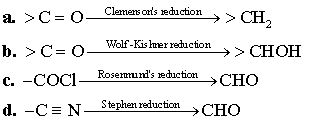
Answer : B
Question. Which of the following gives aldol condensation reaction?
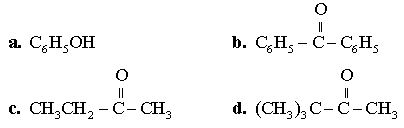
Answer : C
Question. Which of the following organic compounds exhibits positive Fehling test as well as iodoform test?
a. Methanal
b. Ethanol
c. Propanone
d. Ethanal
Answer : D
Question. Ethyne on reaction with water in the presence of 4 HgSO and 2 4 H SO gives:
a. Acetone
b. Acetaldehyde
c. Acetic acid
d. Ethyl alcohol
Answer : B
Question. Consider the following statement Acetophenone can be prepared by:
(A) Oxidation of 1-phenylethanol
(B) Reaction of benzalthanol with methyl magnesium bromide
(C) Friedel craft’s reaction of benzene with acetyl chloride
(D) Distillation of calcium benzoate
a. A and B
b. A and D
c. A and C
d. C and D
Answer : C
Question. On heating calcium acetate and calcium formate, the product formed is:
a. CH3 COCH3
b. CH3 CHO
c. HCHO+ CaCO3
d. CH3 CHO+ CaCO3
Answer : D
Question. Benzaldehyde and acetaldehyde can be differentiated by:
a. HCN
b. NH2 OH
c. Hydrazine
d. NaOH solution
Answer : D
Question. The end product in the following sequence of reaction is:

a. Acetic acid
b. Isopropyl alcohol
c. Acetone
d. Ethanol
Answer : C
Question. Compound which gives acetone on ozonolysis?
a. CH3 −CH = CH−CH3
b. (CH3)2 C = C(CH3)2
c. C6 H5 CH = CH2
d. CH3 CH = CH2
Answer : B
Question. Aldol condensation will not be observed in :
a. Chloral
b. Phenyl acetaldehyde
c. Hexanal
d. Ethanol
Answer : A
Question. Which of the following compounds containing carbonyl group will give coloured crystalline compound with?
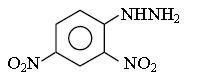
a. CH3 COCl
b. CH3 COCH3
c. CH3 CO(OC2 H5)
d. CH3 CONH2
Answer : B
Question. The compound obtained by the reduction of propionaldehyde by amalgamated zinc and concentrated HCl is:
a. Propanol
b. Propane
c. Propene
d. All of these
Answer : B
Question. Formaldehyde when treated with KOH gives methanol and potassium formate. The reaction is known as?
a. Perkin reaction
b. Claisen reaction
c. Cannizzaro reaction
d. Knoevenagel reaction
Answer : C
Question. Which of the following does not give brick red precipitate with Fehling solution?
a. Acetone
b. Acetaldehyde
c. Formalin
d. D-glucose
Answer : A
Question. Acetaldehyde when treated with dilute NaOH gives?
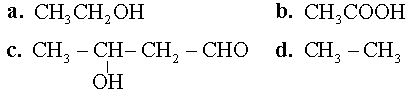
Answer : C
Question. C2H5CHO and (CH3)2 CO can be distinguished by testing with:
a. Phenyl hydrazine
b. Hydroxylamine
c. Fehling solution
d. Sodium bisulphite
Answer : C
Question. Which of the following products is formed when benzaldehyde is treated with 3 CH MgBr and the addition product so obtained is subjected to acid hydrolysis?
a. Secondary alcohol
b. A primary alcohol
c. Phenol
d. Tert-Butyl alcohol
Answer : A
Question. Benzyl alcohol and sodium benzoate is obtained by the action of sodium hydroxide on benzaldehyde. This reaction is known as:
a. Perkin’s reaction
b. Cannizzaro’s reaction
c. Sandmeyer’s reaction
d. Claisen condensation
Answer : B
Question. To distinguish between formaldehyde and acetaldehyde, we require:
a. Tollen's reagent
b. Fehling's solution
c. Schiff's reagent
d. Caustic soda solution
Answer : D
Question. Dimethyl ketones are usually characterised through:
a. Tollen's reagent
b. Iodoform test
c. Schiff's test
d. Benedict's reagent
Answer : B
Question. If formaldehyde and KOH are heated, then we get:
a. Acetylene
b. Methane
c. Methyl alcohol
d. Ethyl formate
Answer : C
Question. The alkaline CuSO4 containing sodium potassium tart rate does not react with:
a. CH3 CHO
b. C2 H5 CHO
c. C6 H5 CH2 CHO
d. C6 H5 CHO
Answer : D
Question. The light yellow compound produced when acetone reacts with iodine and alkali, is?
a. CH3.CO.CH2 I
b. CH3I
c. CHI3
d. None of these
Answer : C
Question. Which of the following will undergo aldol condensation?
a. Acetaldehyde
b. Propanaldehyde
c. Benzaldehyde
d. Trideuteroacetaldehyde
Answer : A. B. D
Question. Acetaldehyde cannot show:
a. Iodoform test
b. Lucas test
c. Benedict's test
d. Tollen's test
Answer : B
Question. Correct order of reactivity of CH3 CHO,C2 H6 COCH3 and CH3 COCH3 is:
a. CH3 CHO > CH3 COCH3 > CH3 COC2 H5
b. C2 H5 COCH3 > CH3 COCH3 > CH3 CHO
c. CH3 COCH3 > CH3 CHO > C2 H5 COCH3
d. CH3 COCH3 > C2 H5 COCH3 > CH3 CHO
Answer : A
Question. One mole of an organic compound requires 0.5 mole of oxygen to produce an acid. The compound may be:
a. Alcohol
b. Ether
c. Ketone
d. Aldehyde
Answer : D
Question. Aldehydes can be oxidised by :
a. Tollen's reagent
b. Fehling solution
c. Benedict solution
d. All of these
Answer : D
Question. Acetaldehyde and acetone differ in their reaction with:
a. Sodium bisulphite
b. Ammonia
c. Phosphorus pentachloride
d. Phenyl hydrazine
Answer : B
Question. CH3 CHO react with aqueous NaOH solution to form:
a. 3-hydroxy butanal
b. 2-hydroxy butanal
c. 4-hydroxy butanal
d. 3-hydroxy butanol
Answer : A
Question. Identify the product Y in the sequence:

a. CH3 OH
b. CH3 CH2 OH
c. (CH3)2 CHOH
d. (CH3)3 COH
Answer : C
Question. Which of the following reagents is used to distinguish acetone and acetophenone?
a. NaHSO3
b. Grignard reagent
c. Na2 SO4
d. NH4 Cl
Answer : A
Question. Cinnamic acid is formed when 6 5 C H −CHO condenses with 3 2 (CH CO) O in presence of?
a. Conc. H2 SO4
b. Sodium acetate
c. Sodium metal
d. Anhydrous ZnCl2
Answer : B
Question. A mixture of benzaldehyde and formaldehyde on heating with aqueous NaOH solution gives:
a. Benzyl alcohol and sodium formate
b. Sodium benzoate and methyl alcohol
c. Sodium benzoate and sodium formate
d. Benzyl alcohol and methyl alcohol
Answer : A
Question. Aldehydes and ketones can be reduced to hydrocarbon by using:
a. LiAlH4
b. H2 / Pd − BaSO4
c. Na −Hg /HCl
d. NH2 − NH2 / C2 H5 ONa
Answer : D
Question. Which gives difference between aldehyde and ketone?
a. Fehling's solution
b. Tollen's reagent
c. Schiff's reagent
d. Benedict's solution
e. All of these
Answer : C
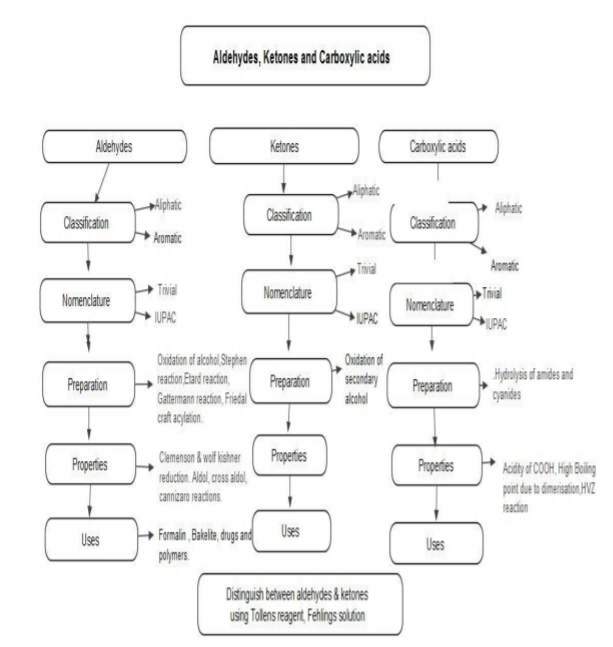
Please click the link below to download pdf file for CBSE Class 12 Chemistry - Aldehydes, Ketones Concept Map
Free study material for Chemistry
Study Material and Revision Notes for Class 12 Chemistry Unit 8 Aldehydes, Ketones and Carboxylic Acids
Key Concepts and Summary for Class 12 Chemistry Unit 8 Aldehydes, Ketones and Carboxylic Acids
Explore reliable chapter overviews for Unit 8 Aldehydes, Ketones and Carboxylic Acids tailored for Class 12 learners. Use these structured points to grasp difficult themes and ensure solid preparation for upcoming assessments.
NCERT-Aligned Chapter Summary and Notes
Built using the official NCERT book for Class 12 Chemistry, these notes provide reliable academic guidance. Pair your summary review with our recommended NCERT solutions to master optimal problem-solving approaches.
Next Steps in Your Exam Preparation
Explore our broader library of printable assignments, chapter notes, and mock tests designed to support continuous revision and secure higher marks in CBSE assessments.
FAQs
You can download the teacher prepared revision notes for CBSE Class 12 Chemistry Aldehydes Ketones Notes from StudiesToday.com. These notes are designed as per 2026-27 academic session to help Class 12 students get the best study material for Chemistry.
Yes, our CBSE Class 12 Chemistry Aldehydes Ketones Notes include 50% competency-based questions with focus on core logic, keyword definitions, and the practical application of Chemistry principles which is important for getting more marks in 2026 CBSE exams.
Yes, our CBSE Class 12 Chemistry Aldehydes Ketones Notes provide a detailed, topic wise breakdown of the chapter. Fundamental definitions, complex numerical formulas and all topics of CBSE syllabus in Class 12 is covered.
These notes for Chemistry are organized into bullet points and easy-to-read charts. By using CBSE Class 12 Chemistry Aldehydes Ketones Notes, Class 12 students fast revise formulas, key definitions before the exams.
No, all study resources on StudiesToday, including CBSE Class 12 Chemistry Aldehydes Ketones Notes, are available for immediate free download. Class 12 Chemistry study material is available in PDF and can be downloaded on mobile.