

Chapter-wise Worksheets for Class 6 Mathematics: Chapter 06 Integers
Review targeted academic worksheets with the CBSE Class 6 Mathematics Integers Worksheet Set 05. Built according to official educational standards for the 2026-27 term, these downloadable Class 6 Mathematics resources support effective daily practice and detailed self-evaluation for Chapter 06 Integers.
Practice Class 6 Mathematics Worksheets: Chapter 06 Integers
View or download the dedicated CBSE Class 6 Mathematics Integers Worksheet Set 05 resource below. Engaging with these practice papers under focused study conditions ensures continuous academic progress and mastery of the 2026-27 curriculum for Chapter 06 Integers.
1. Using number line find the following :
Question 1(i). -3 + 5
Answer: Start at 0, move 3 units to the left to reach -3, then move 5 units to the right to reach 2.
\(-3 + 5 = 2\)
In simple words: Moving right on the number line increases the value.
Exam Tip: Always start from 0 for the first number, then move right for positive numbers and left for negative numbers.
Question 1(ii). -4 + (-3)
Answer: Start at 0, move 4 units to the left to reach -4, then move another 3 units to the left to reach -7.
\(-4 + (-3) = -7\)
In simple words: Adding a negative number means moving further left.
Exam Tip: Two negative steps in the same direction add up to a larger negative number.
Question 1(iii). 5 + (-2)
Answer: Start at 0, move 5 units to the right to reach 5, then move 2 units to the left to reach 3.
\(5 + (-2) = 3\)
In simple words: Adding a negative number is the same as subtracting.
Exam Tip: A positive and a negative movement partially cancel each other out.
Question 1(iv). -5 + 3
Answer: Start at 0, move 5 units to the left to reach -5, then move 3 units to the right to reach -2.
\(-5 + 3 = -2\)
In simple words: Start at -5 and take 3 steps back toward zero.
Exam Tip: The result takes the sign of the number with the larger absolute value.
Question 1(v). -3 - (-2)
Answer: Subtracting a negative integer is the same as adding its positive counterpart: \(-3 + 2 = -1\). On a number line, start at -3 and move 2 units to the right to reach -1.
\(-3 - (-2) = -1\)
In simple words: Negative of a negative becomes positive.
Question 1(vi). 5 - (-2)
Answer: \(5 - (-2) = 5 + 2 = 7\). On a number line, start at 5 and move 2 units to the right to reach 7.
In simple words: Subtracting negative 2 is like adding 2.
Exam Tip: Change consecutive minus signs to a plus sign before solving.
Question 1(vii). -4 - (+1)
Answer: \(-4 - 1 = -5\). On a number line, start at -4 and move 1 unit to the left to reach -5.
In simple words: Take 1 away from -4 to get -5.
Exam Tip: Subtracting a positive integer moves you to the left.
Question 1(viii). -7 + 4
Answer: Start at -7, move 4 units to the right to reach -3.
\(-7 + 4 = -3\)
In simple words: Combine -7 and 4 to get -3.
Exam Tip: Find the difference between 7 and 4, which is 3, and keep the sign of 7.
Question 1(ix). 3 more than -5
Answer: \(-5 + 3 = -2\). Start at -5 and move 3 units to the right.
In simple words: "More than" means add.
Exam Tip: "More than" translates to a positive addition.
Question 1(x). -2 more than -3
Answer: \(-3 + (-2) = -5\). Start at -3 and move 2 units to the left.
In simple words: Add -2 to -3.
Exam Tip: Adding a negative amount decreases the total value.
Question 1(xi). -2 less than -4
Answer: \(-4 - (-2) = -4 + 2 = -2\). Start at -4 and move 2 units to the right.
In simple words: "Less than" means subtract.
Exam Tip: Be careful with signs: subtracting a negative becomes addition.
Question 1(xii). 3 less than -2
Answer: \(-2 - 3 = -5\). Start at -2 and move 3 units to the left.
In simple words: Subtract 3 from -2.
Exam Tip: "Less than" means you move left on the number line.
Question 1(xiii). -4 less than -1
Answer: \(-1 - (-4) = -1 + 4 = 3\). Start at -1 and move 4 units to the right.
In simple words: Subtracting negative 4 from -1 gives 3.
Exam Tip: Watch out for double negatives when dealing with "less than".
2. Evaluate the following :
Question 2(1). -25 + 72
Answer: \(72 - 25 = 47\)
In simple words: Subtract 25 from 72.
Exam Tip: The sign of the larger number wins.
Question 2(2). -75 + 32
Answer: \(-(75 - 32) = -43\)
In simple words: Find the difference and keep the negative sign.
Question 2(3). 25 - 79
Answer: \(-(79 - 25) = -54\)
In simple words: Subtracting a larger number from a smaller one yields a negative result.
Exam Tip: Flip the subtraction and make the result negative.
Question 2(4). -32 - (-58)
Answer:
\(= -32 + 58\)
\(= 58 - 32 = 26\)
In simple words: Convert the double negative into addition.
Exam Tip: Always clear parentheses by multiplying adjacent signs first.
Question 2(5). 48 - (-92)
Answer:
\(= 48 + 92 = 140\)
In simple words: Add 48 and 92.
Exam Tip: Subtracting a negative is the same as adding a positive.
Question 2(6). -85 + 78
Answer:
\(= -(85 - 78) = -7\)
In simple words: Subtract 78 from 85 and make it negative.
Exam Tip: Check which absolute value is greater.
Question 2(7). -95 - 99
Answer:
\(= -(95 + 99) = -194\)
In simple words: Combine two negative debts.
Exam Tip: Same signs mean add the numbers and keep the common sign.
Question 2(8). -105 + 105
Answer:
\(= 0\)
In simple words: A number plus its opposite equals zero.
Exam Tip: These are additive inverses.
Question 2(9). -28 - 108
Answer:
\(= -(28 + 108) = -136\)
In simple words: Add both numbers and attach a negative sign.
Question 2(10). -203 + 702
Answer:
\(= 702 - 203 = 499\)
In simple words: Subtract 203 from 702.
Exam Tip: Positive number is larger, so the result is positive.
Question 2(11). -405 + (-208)
Answer:
\(= -(405 + 208) = -613\)
In simple words: Add 405 and 208, then make the result negative.
Exam Tip: Sum of two negative integers is always negative.
Question 2(12). -300 - (-215)
Answer:
\(= -300 + 215\)
\(= -(300 - 215) = -85\)
In simple words: Change to -300 + 215 and find the difference.
Question 2(13). 500 - 700
Answer:
\(= -(700 - 500) = -200\)
In simple words: Subtract 700 from 500.
Exam Tip: Smaller minus larger gives a negative result.
Question 2(14). -200 + 150
Answer:
\(= -(200 - 150) = -50\)
In simple words: Find the difference between 200 and 150.
Exam Tip: Keep the sign of the number with the greater absolute value.
Question 2(15). -173 + -293
Answer:
\(= -(173 + 293) = -466\)
In simple words: Add both negative numbers together.
Exam Tip: "-173 + -293" is the same as "-173 - 293".
Question 2(16). -28 + 75 + -56 + -28
Answer:
\(= (-28 - 56 - 28) + 75\)
\(= -112 + 75 = -37\)
In simple words: Group all negatives together, sum them up, then add the positive number.
Exam Tip: Grouping like signs makes addition much easier.
Question 2(17). -108 - (-210) - 408 + 709
Answer:
\(= -108 + 210 - 408 + 709\)
\(= (-108 - 408) + (210 + 709)\)
\(= -516 + 919 = 403\)
In simple words: First remove parentheses, then group positives and negatives separately.
Exam Tip: Handle signs carefully before grouping.
Question 2(18). +739 - 710 - (-210) + (-80)
Answer:
\(= 739 - 710 + 210 - 80\)
\(= (739 + 210) - (710 + 80)\)
\(= 949 - 790 = 159\)
In simple words: Simplify signs and combine terms.
Exam Tip: Convert all double signs first.
Question 2(19). 709 + 483 - 1009 + (-403)
Answer:
\(= 709 + 483 - 1009 - 403\)
\(= (709 + 483) - (1009 + 403)\)
\(= 1192 - 1412 = -220\)
In simple words: Sum positives, sum negatives, then find the difference.
Exam Tip: Double check your addition and subtraction steps.
Question 2(20). 208 - [-73 - (43 - 78)]
Answer:
\(= 208 - [-73 - (-35)]\)
\(= 208 - [-73 + 35]\)
\(= 208 - [-38]\)
\(= 208 + 38 = 246\)
In simple words: Solve inside the innermost parentheses first, then brackets.
Exam Tip: Follow BODMAS order of operations.
Question 2(21). 513 - {-89 - [58 - (7 - 8 - 10)]}
Answer:
\(= 513 - {-89 - [58 - (-11)]}\)
\(= 513 - {-89 - [58 + 11]}\)
\(= 513 - {-89 - 69}\)
\(= 513 - {-158}\)
\(= 513 + 158 = 671\)
In simple words: Work from the innermost brackets outwards.
Exam Tip: Clear parentheses one level at a time.
Question 2(22). -403 + [703 - (-48) + (-1085)]
Answer:
\(= -403 + [703 + 48 - 1085]\)
\(= -403 + [751 - 1085]\)
\(= -403 + [-334]\)
\(= -403 - 334 = -737\)
In simple words: Simplify inside the square bracket first.
Question 2(23). -4532 + -7351 + 1532
Answer:
\(= (-4532 + 1532) - 7351\)
\(= -3000 - 7351 = -10351\)
In simple words: Combine -4532 and 1532 first to get -3000, then subtract 7351.
Exam Tip: Look for numbers that make clean round values when combined.
Question 2(24). 728 - (-425) - 9285
Answer:
\(= 728 + 425 - 9285\)
\(= 1153 - 9285 = -8132\)
In simple words: Add 728 and 425, then subtract 9285.
Exam Tip: Convert subtraction of a negative into addition first.
Question 2(25). -58 + 98 - 40
Answer:
\(= (-58 - 40) + 98\)
\(= -98 + 98 = 0\)
In simple words: Combine negative terms to get -98, which cancels with 98.
Exam Tip: Grouping numbers that sum to zero saves time.
Question 2(26). -403 - (-375) + 102
Answer:
\(= -403 + 375 + 102\)
\(= -403 + 477 = 74\)
In simple words: Change -(-375) to +375, add positives, then combine.
Exam Tip: Add all positive terms together before subtracting.
Question 2(27). -459 - 729 - (-358) + -2085
Answer:
\(= -459 - 729 + 358 - 2085\)
\(= (-459 - 729 - 2085) + 358\)
\(= -3273 + 358 = -2915\)
In simple words: Sum all negative numbers, then add the positive number.
Exam Tip: Double check addition of multiple large negative numbers.
Question 2(28). -78 - (-532)
Answer:
\(= -78 + 532\)
\(= 532 - 78 = 454\)
In simple words: Change double negative to positive and subtract.
Exam Tip: Subtraction of negative becomes addition.
2. Use '<' or '>' or '=' to fill the box to get the correct statement :
Question 2(1). -138 [ ] -(-138)
Answer: (<) -138 < 138
Left side is -138, right side is \(-(-138) = 138\). A negative number is always less than a positive number.
In simple words: -138 is less than +138.
Exam Tip: Simplify both sides completely before comparing.
Question 2(2). -728 [ ] 0
Answer: (<) -728 < 0
Any negative integer is always less than zero.
In simple words: Negative numbers are smaller than zero.
Exam Tip: Zero is greater than all negative numbers.
Question 2(3). -238 [ ] -347
Answer: (>) -238 > -347
For negative numbers, the one with the smaller absolute value is greater.
In simple words: -238 is closer to zero than -347, so it is larger.
Question 2(4). -41 [ ] -8
Answer: (<) -41 < -8
-41 is further to the left on the number line than -8.
In simple words: -8 is greater than -41.
Exam Tip: Larger negative digits represent smaller values.
Question 2(5). 32 [ ] -78
Answer: (>) 32 > -78
Any positive number is always greater than any negative number.
In simple words: Positive is always greater than negative.
Exam Tip: You don't need to calculate magnitudes when comparing positive and negative numbers.
Question 2(6). -97 [ ] -79
Answer: (<) -97 < -79
-97 is smaller than -79 because it is further left on the number line.
In simple words: -79 is closer to zero, so it is greater.
Exam Tip: Compare the positive versions and reverse the inequality sign for negatives.
Question 2(7). 0 [ ] -79
Answer: (>) 0 > -79
Zero is greater than any negative number.
In simple words: Zero is higher than -79.
Exam Tip: 0 is always greater than negative integers.
Question 2(8). -438 [ ] -458
Answer: (>) -438 > -458
-438 is closer to zero than -458.
In simple words: -438 is greater than -458.
Exam Tip: Smaller absolute value wins in negative comparisons.
Question 2(9). 48 [ ] 408
Answer: (<) 48 < 408
48 is less than 408.
In simple words: 408 is much larger than 48.
Exam Tip: Standard positive number comparison rule applies.
3. Complete the blanks :
Question 3(1). -28, -38, -48, ______, ______, ______, ______
-287, -277, -267, ______, ______, ______, ______
Answer:
First sequence: -58, -68, -78, -88 (decreasing by 10)
Second sequence: -257, -247, -237, -227 (increasing by 10)
In simple words: Identify the pattern and continue it.
Exam Tip: Check whether numbers are increasing or decreasing in magnitude.
Question 3(2). -589, -586, -583, ______, ______, ______, ______
-13, -8, -3, ______, ______, ______, ______, ______, ______
Answer:
First sequence: -580, -577, -574, -571 (increasing by 3)
Second sequence: 2, 7, 12, 17, 22, 27 (increasing by 5)
In simple words: Find the common difference between consecutive terms.
Exam Tip: Subtract the first term from the second term to find the step size.
Write the opposite of the following :
Question 4(1). 739 above sea level.
Answer: 739 below sea level
In simple words: Opposite of above is below.
Exam Tip: Reverse the directional word while keeping the number same.
Question 4(2). Going 730m towards north
Answer: Going 730m towards south
In simple words: Opposite of north is south.
Exam Tip: North and south are opposite directions.
Question 4(3). -413
Answer: +413 (or 413)
In simple words: Change the negative sign to positive.
Exam Tip: Opposite of a negative number is its positive counterpart.
Question 4(4). +705
Answer: -705
In simple words: Change the positive sign to negative.
Exam Tip: Opposite of a positive number is its negative counterpart.
Question 4(5). Depositing Rs 750.
Answer: Withdrawing Rs 750
In simple words: Opposite of depositing money is withdrawing money.
Exam Tip: Deposit and withdrawal are financial opposites.
5. Fill up the blanks :
Question 5(1). ___________________ is neither positive nor negative.
Answer: Zero (0)
In simple words: Zero has no sign.
Exam Tip: 0 is neutral in the integer system.
Question 5(2). _____________________ is the smallest positive integer.
Answer: 1
In simple words: Counting starts at 1 for positives.
Question 5(3). _______________________ is the greatest negative integer.
Answer: -1
In simple words: -1 is closest to zero among all negatives.
Exam Tip: -1 is the largest negative number.
Question 5(4). All positive integers are ___________________ than zero and negative integers.
Answer: greater
In simple words: Positive numbers are always bigger than zero and negatives.
Exam Tip: Positives lie to the right of zero on the number line.
Question 5(5). All negative integers are __________________ than zero and positive integers.
Answer: smaller (or less)
In simple words: Negatives are always smaller than zero and positives.
Exam Tip: Negatives lie to the left of zero.
Question 5(6). -8 + _________ = 0
Answer: 8
\(-8 + 8 = 0\)
In simple words: Add the additive inverse.
Exam Tip: A number plus its opposite is zero.
Question 5(7). -78 + _________ = -68
Answer: 10
\(-68 - (-78) = -68 + 78 = 10\)
In simple words: Find what must be added to -78 to reach -68.
Exam Tip: Subtract the starting number from the target number.
Question 5(8). 48 + _________ = 0
Answer: -48
\(48 + (-48) = 0\)
In simple words: Add -48 to 48 to get zero.
Exam Tip: Additive inverse of 48 is -48.
Question 5(10). 69 + _________ = +56
Answer: -13
\(56 - 69 = -13\)
In simple words: Subtract 69 from 56.
Exam Tip: Target minus initial value gives the missing addend.
Question 5(11). -32 + _________ = -45
Answer: -13
\(-45 - (-32) = -45 + 32 = -13\)
In simple words: Add -13 to -32 to get -45.
Exam Tip: Target value minus given addend equals missing value.
Question 5(12). +100 + _________ = 80
Answer: -20
\(80 - 100 = -20\)
In simple words: Subtract 100 from 80.
Exam Tip: Decreasing from 100 to 80 requires adding -20.
Question 5(13). 43 + -35 = _________
Answer: 8
\(43 - 35 = 8\)
In simple words: Subtract 35 from 43.
Exam Tip: Adding a negative is subtraction.
Question 5(14). 43 - _________ = 52
Answer: -9
\(43 - 52 = -9\)
In simple words: 43 minus -9 equals 43 + 9 = 52.
Exam Tip: \(43 - x = 52 \implies x = 43 - 52 = -9\).
Question 5(15). _________ - (-9) = 61
Answer: 52
\(x + 9 = 61 \implies x = 61 - 9 = 52\)
In simple words: 52 minus negative 9 gives 61.
Exam Tip: Simplify to \(x + 9 = 61\) then solve.
Question 5(16). _________ + -8 = 52
Answer: 60
\(x - 8 = 52 \implies x = 52 + 8 = 60\)
In simple words: 60 plus -8 equals 52.
Exam Tip: Isolate the blank by adding 8 to both sides.
Question 5(17). -27 + _________ = -35
Answer: -8
\(-35 - (-27) = -35 + 27 = -8\)
In simple words: Add -8 to -27 to get -35.
Exam Tip: Subtract current value from target value.
Question 5(18). -48 - _________ = 0
Answer: -48
\(-48 - (-48) = -48 + 48 = 0\)
In simple words: Subtracting -48 from -48 gives zero.
Exam Tip: Any number minus itself equals zero.
1. Using the number line write the integer which is:
(a) 3 more than 5
(b) 5 more than –5
(c) 6 less than 2
(d) 3 less than –2
Solutions: (a)
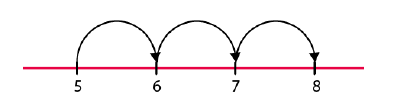
Hence, 8
(b)

Hence, 0
(c)

Hence, -4
(d)
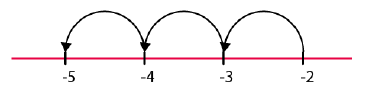
Hence,-5
2. Use number line and add the following integers: (a) 9 + (–6) (b) 5 + (–11)
(c) (–1) + (–7)
(d) (–5) + 10
(e) (–1) + (–2) + (–3) (f) (–2) + 8 + (–4)
Solutions:
(a)
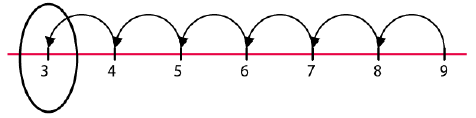
Hence, 3
b)
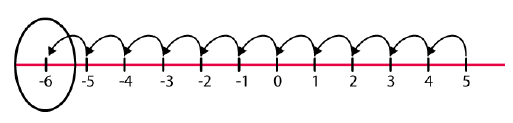
Hence, -6
(c)
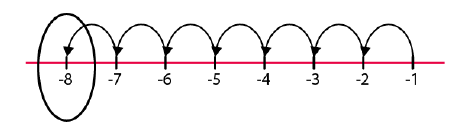
Hence, -8
(d)

Hence, 5
(e)

Hence, -6
(f)
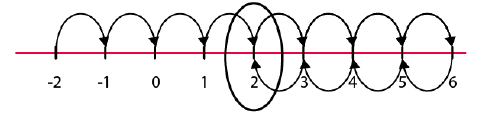
Hence, 2
3. Add without using number line:
(a) 11 + (–7)
(b) (–13) + (+18)
(c) (–10) + (+19)
(d) (–250) + (+150)
(e) (–380) + (–270)
(f) (–217) + (–100)
Solutions:
(a) 11 + (-7) = 4
(b) (-13) + (+18) = 5
(c) (-10) + (+19) = 9
(d) (-250) + (+150) = -100
(e) (-380) + (-270) = -650
(f) (-217) + (-100) = -317
Please refer to attached file for Integers
Free study material for Mathematics
Download Class 6 Mathematics Chapter 06 Integers Practice Worksheets
Practice Exercises for Class 6 Mathematics Chapter 06 Integers
Review targeted practice exercises for Class 6 Mathematics Chapter 06 Integers. Curated to match official CBSE guidelines, these printable problem sets support daily revision and improve overall test readiness.
Step-by-Step Solutions and Practice Guidelines
Each worksheet draws directly from authorized standard textbooks to maintain academic accuracy. Evaluating your finished exercises against expert-verified solutions helps master the formal presentation standards expected in school evaluations.
Enhance Speed with Online Practice
Follow up your worksheet practice by attempting the interactive online MCQ tests for Chapter 06 Integers to evaluate your execution speed. All printable assignments and revision sheets on our platform are updated for the 2026 session and available free of charge.
FAQs
You can download the latest chapter-wise printable worksheets for Class 6 Mathematics Chapter 06 Integers for free from StudiesToday.com. These have been made as per the latest CBSE curriculum for this academic year.
Yes, Class 6 Mathematics worksheets for Chapter 06 Integers focus on activity-based learning and also competency-style questions. This helps students to apply theoretical knowledge to practical scenarios.
Yes, we have provided solved worksheets for Class 6 Mathematics Chapter 06 Integers to help students verify their answers instantly.
Yes, our Class 6 Mathematics test sheets are mobile-friendly PDFs and can be printed by teachers for classroom.
For Chapter 06 Integers, regular practice with our worksheets will improve question-handling speed and help students understand all technical terms and diagrams.