

Download Class 5 Environmental Studies Practice Worksheets
Review targeted academic worksheets with the CBSE Class 5 EVS Super Senses Worksheet. Built according to official educational standards for the 2026-27 term, these downloadable Class 5 Environmental Studies resources support effective daily practice and detailed self-evaluation for Chapter 01 Super Senses.
Access Chapter 01 Super Senses Practice Papers and Solutions
View or download the dedicated CBSE Class 5 EVS Super Senses Worksheet resource below. Engaging with these practice papers under focused study conditions ensures continuous academic progress and mastery of the 2026-27 curriculum for Chapter 01 Super Senses.
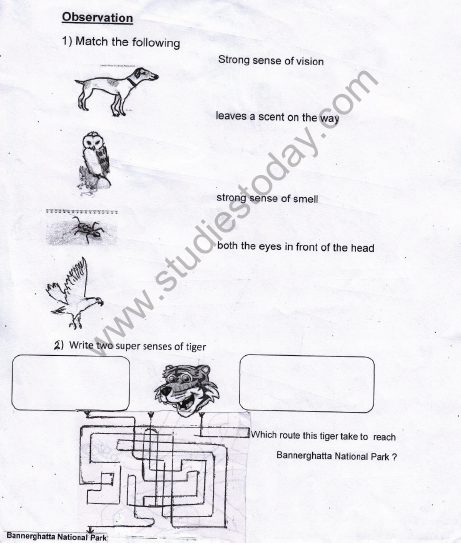
Observation
Question 1. Match the following
(Column A: Dog, Owl, Ant, Eagle)
(Column B: Strong sense of vision, leaves a scent on the way, strong sense of smell, both the eyes in front of the head)
Answer: Dog - strong sense of smell
Owl - both the eyes in front of the head
Ant - leaves a scent on the way
Eagle - Strong sense of vision
In simple words: Animals have special senses like sharp vision or smell to survive in nature.
Exam Tip: Remember specific sensory organs and super senses of common animals like ants and dogs.
Question 2. Write two super senses of tiger
Answer: 1. Tigers have a very strong sense of hearing that can make out the difference between the rustling of leaves and the sound of an animal moving.
2. Tigers have an extraordinary sense of smell and vision in the dark, which is six times better than that of humans.
In simple words: Tigers can see clearly in the dark and hear sounds very sharply.
Exam Tip: Mention both night vision and acute hearing for full marks.
Question 3. Which route this tiger take to reach Bannerghatta National Park?
Answer: Following the correct maze path from the tiger to Bannerghatta National Park involves tracing the open, uninterrupted line route through the maze.
In simple words: Trace the path carefully without hitting any closed walls.
Exam Tip: Use a pencil to trace mazes lightly before marking the final path.
Competency: Identification
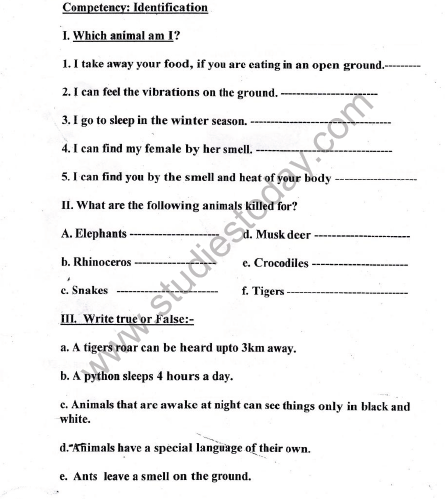
Question I. Which animal am I?
1. I take away your food, if you are eating in an open ground.
Answer: Kite / Crow
In simple words: Birds like kites snatch food from open places.
Exam Tip: Birds of prey like kites have sharp eyesight from great heights.
Question I.2. I can feel the vibrations on the ground.
Answer: Snake
In simple words: Snakes do not have external ears, so they feel vibrations on the ground.
Exam Tip: Snakes detect ground vibrations through their skin and jaw bones.
Question I.3. I go to sleep in the winter season.
Answer: Lizard / Bear / Python
In simple words: Some animals go into a long deep sleep during cold winters.
Exam Tip: This long winter sleep is called hibernation.
Question I.4. I can find my female by her smell.
Answer: Silkworm / Dog
In simple words: Male silkworms can find their females from miles away through her scent.
Question I.5. I can find you by the smell and heat of your body.
Answer: Mosquito
In simple words: Mosquitoes find humans by sensing body heat and the smell of the sole of feet.
Exam Tip: Mosquitoes also sense body moisture.
Question II. What are the following animals killed for?
A. Elephants - Answer: For their tusks (ivory)
B. Rhinoceros - Answer: For their horn
C. Snakes - Answer: For their skin
D. Musk deer - Answer: For its musk (scent)
E. Crocodiles - Answer: For their skin
F. Tigers - Answer: For their skin and bones
In simple words: Poachers hunt animals illegally for valuable body parts.
Exam Tip: Learn specific body parts for each endangered animal.
Question III. Write true or false:
a. A tigers roar can be heard upto 3km away.
Answer: True
In simple words: A tiger's roar is extremely loud and travels long distances.
Exam Tip: A tiger's roar can be heard up to 3 kilometres away.
Question III.b. A python sleeps 4 hours a day.
Answer: False
In simple words: Pythons sleep for around 18 hours a day.
Exam Tip: Check sleeping hours of python (18 hours) and sloth (17 hours).
Question III.c. Animals that are awake at night can see things only in black and white.
Answer: True
In simple words: Nocturnal animals see only black and white shades.
Exam Tip: Animals that are awake at night can only see black and white objects.
Question III.d. Animals have a special language of their own.
Answer: True
In simple words: Animals communicate warnings and messages through sounds and signals.
Exam Tip: Dolphins, birds, and langurs give warning alarms to each other.
Question III.e. Ants leave a smell on the ground.
Answer: True
In simple words: Ants leave a scent so that other ants can follow the same trail.
Exam Tip: This explains how ants move in a straight line one after another.
Question 3. Write the names of national parks or protected forest areas in
(a) Assam: Answer: Kaziranga National Park
(b) Kerala: Answer: Periyar National Park
(c) Gujrat: Answer: Gir National Park
(d) Madhya Pradesh: Answer: Kanha National Park
In simple words: National parks protect wild animals in their natural habitats.
Exam Tip: Remember state-wise famous national parks for wildlife questions.
Question 4. Given below is the sleeping time of some animals. Shade the portion in the 24 hour clock given alongside.
(a) Dog 6 hours
(b) Buffalo 4 hours
(c) Child 8 hours
(d) Snake 18 hours
Answer: (a) Shade 6 out of 24 sectors (1/4th of the clock circle).
(b) Shade 4 out of 24 sectors (1/6th of the clock circle).
(c) Shade 8 out of 24 sectors (1/3rd of the clock circle).
(d) Shade 18 out of 24 sectors (3/4th of the clock circle).
In simple words: Each sector in the 24-hour clock represents 1 hour. Shade as many hours as the animal sleeps.
Exam Tip: Divide total hours of sleep by 24 to find the fraction of the circle to shade.
Question 5. Name the parts of the following animals they are hunted for
Snake, elephant, rhinoceros, musk deer
Answer: Snake: Skin
Elephant: Tusks (Ivory)
Rhinoceros: Horn
Musk deer: Musk gland
In simple words: Poachers kill these animals for valuable body parts.
Exam Tip: Memorize animal products and the animals they are sourced from.
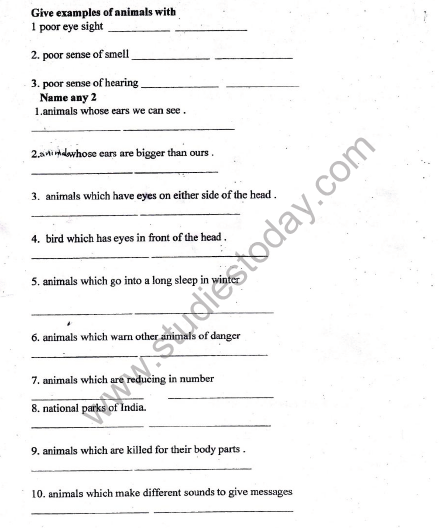
Question Give examples of animals with
1. 1 poor eye sight: Answer: Bat, Mole
2. 2 poor sense of smell: Answer: Vulture, Eagle
3. 3 poor sense of hearing: Answer: Snake, Earthworm
In simple words: Different animals have different sensory strengths and weaknesses.
Exam Tip: Birds of prey have great vision but poor sense of smell.
Question Name any 2
1. animals whose ears can see (can be seen): Answer: Elephant, Dog
2. animals whose ears are bigger than ours: Answer: Elephant, Rabbit
3. animals which have eyes on either side of the head: Answer: Cow, Pigeon
4. bird which has eyes in front of the head: Answer: Owl, Eagle
5. animals which go into a long sleep in winter: Answer: Lizard, Bear
6. animals which warn other animals of danger: Answer: Langur, Birds
7. animals which are reducing in number: Answer: Tiger, Rhinoceros
8. national parks of India: Answer: Jim Corbett National Park, Kaziranga National Park
9. animals which are killed for their body parts: Answer: Elephant, Tiger
10. animals which make different sounds to give messages: Answer: Dolphin, Bird
In simple words: List two common examples for each category.
Exam Tip: Keep clear and common examples ready for classification questions.
Question. Which of these lays eggs?
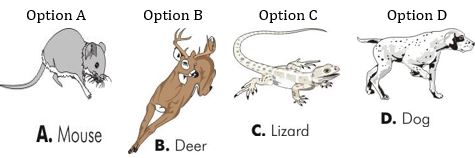
Answer : C
Question. Some people read from books using a special system of printing called Braille. The letters are made from patterns of little dots that rise above the surface of the paper. Which sense organ is involved when a person uses Braille?
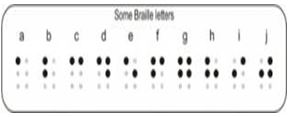
a. Eyes
b. Ears
c. Skin
d. Nose
Answer : C
Question. Which of these animals have young ones that look most different from their parents?
a. Rabbits
b. Ducks
c. Frogs
d. Snakes
Answer : C
Question. When perfume is sprayed in the air, we are able to smell it but not see it because__________________.
a. the perfume is a liquid
b. the perfume is very expensive
c. the perfume is transparent
d. the perfume droplets are too small
Answer : D
Question. Which of these animals has 'scales' on its skin?
a. Crow
b. Frog
c. Fish
d. Goat
Answer : C
Question. Which of these titles best distinguishes Boxes P and Q?
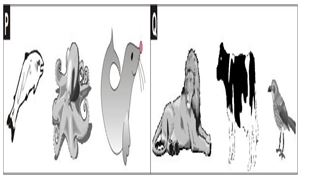
a. P - Water Animals ; Q - Land Animals
b. P - Wild Animals; Q – Domestic Animals
c. P - Water Animals; Q - Tree Animals
d. P - Animals without Wings; Q - Animals with Wings
Answer : A
Question. Which of these animals should be in the group that has six legs and two wings?
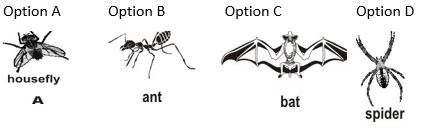
Answer : A
Question. Which bird beak would be most helpful for a bird that eats insects in the bark of trees?
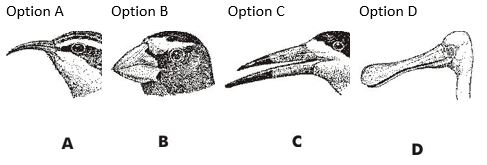
Answer : A
Question. All these animals, except one, live in COLD places only. Which is the odd one out?
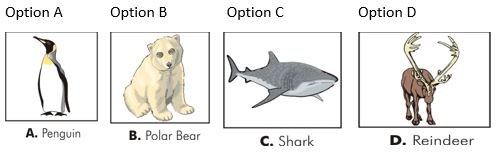
Answer : C
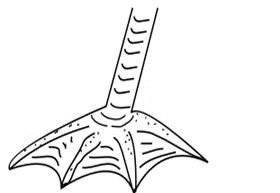
Question. The figure shown here could be the foot of which of these birds?
a. Hawk
b. Duck
c. Sparrow
d. Wood pecker
Answer : B
Question. Which animal's foot is this?
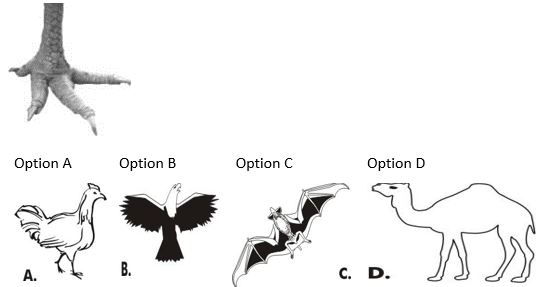
Answer : A
Question. Which one of the following statements about breathing is correct?
a. All living and non-living things breathe.
b. All living things breathe.
c. Only animals breathe.
d. All animals and some plants breathe.
Answer : B
Question. During a science experiment which sense organ is NEVER used to identify an unknown substance?
a. Eyes
b. Ears
c. Nose
d. Tongue
Answer : D
Question. Which of these is a bird?
a. Bat
b. Grasshopper
c. Penguin
d. Butterfly
Answer : C
Question. Here is the picture of an elephant seen in a temple courtyard. Rahul observes it and writes these points in his notebook. Which of these is NOT an observation?
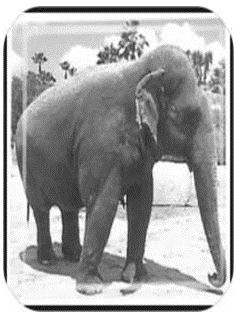
a. The elephant has large ears.
b. The elephant is black in colour.
c. The elephant has a short tail.
d. The elephant lives in the forest.
Answer : D
Question. Which letter could BEST represent an ant?
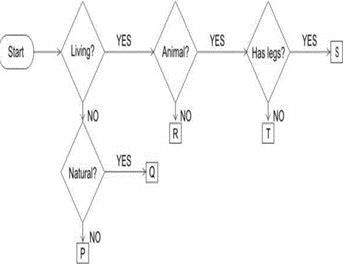
a. P
b. Q
c. R
d. S
e. T
Answer : D
Question. What is the human heart made up of?
a. Muscles
b. Bones
c. muscles and bones
d. skin and hair
Answer : A
Question. What is the approximate rate of a mouse's heartbeat?
a. 80 beats per minute
b. 150 beats per minute
c. 500 beats per minute
d. 1000 beats per minute
Answer : C
Question. What pattern in the animals' heartbeats can be seen from the graph above?
a. Four legged animals have faster heartbeats.
b. Smaller animals have faster heartbeats.
c. Flesh eating animals have slower heartbeats.
d. Birds do not have a heart beat.
Answer : B
Question. What change in this food chain is likely to result in an increase in the mouse population?
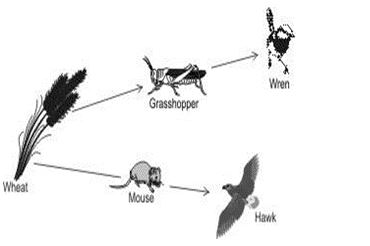
a. decrease in the amount of wheat grown
b. decrease in the number of hawks
c. increase in the number of grasshoppers
d. decrease in the number of wrens
Answer : B
Question. When a bird focuses both eyes on an object, what can it estimate?
a. The distance
b. The size
c. The kind
d. The shadow
Answer : A
Question. From what distance an eagle in the sky can see roti on the ground.
a. 100 mts
b. 8 mts
c. 60 mts
d. 10mts
Answer : B
Question. With which body part can a lion sense the movement and vibration in the air?
a. whiskers
b. tail
c. ears
d. paws
Answer : A
Question. Fill in the blanks
1. Snakes feel ------ on the ground.
2. Animals make ----- to alarm danger to their fellow.
3. ---------- is the protected area made by government to save tigers.
Answer : 1. Vibrations 2. Warning calls 3. Jim Corbett Park
Question. Answer in one word
1. How can a silk worm identify his female companion?
2. Which natural disaster occurred in the year 2004 at Andaman and Nicobar Islands?
Answer : 1. By smell 2. Tsunami
Question. State whether true or false
1. A dog can make out the presence of another dog by the smell of its urine.
2. Animals can see,colored things at night.
Answer : 1.True 2.False
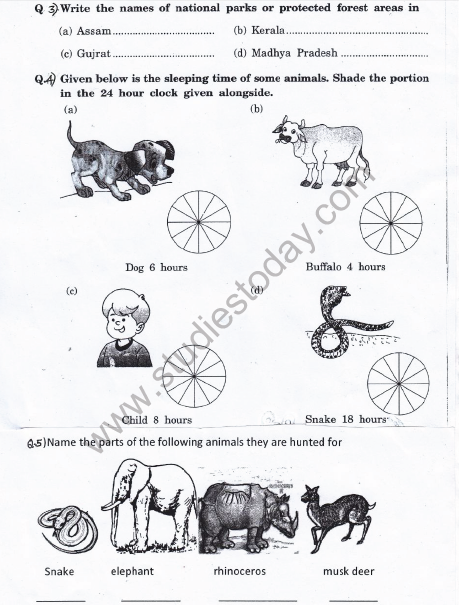
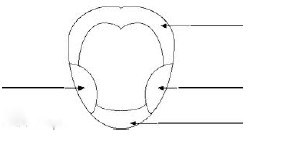
Q 1) Label the taste buds in human tongue
Q 2) The clock is divided into 24 hours time. How will you show the sleeping time clock for given animals?
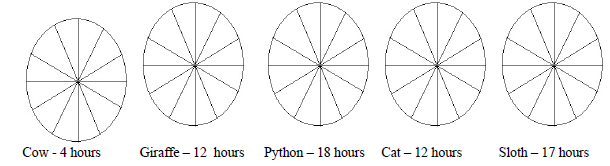
Q 3) Write the sleeping time of animals given above in increasing order.
___________ , _________ , ____________ ,
Q 4) Arrange the name of states from West to East where given National parks of India are situated?
I) Palamu National Park (Jharkhand)
II) Kanha National Park (Madhya Pradesh)
III) Gir National Park (Gujarat)
Ans-
I)
II)
III)
Free study material for Environmental Studies
CBSE Class 5 Environmental Studies Worksheets for Chapter 01 Super Senses
Daily Practice Questions for Class 5 Environmental Studies
Review targeted practice exercises for Class 5 Environmental Studies Chapter 01 Super Senses. Curated to match official CBSE guidelines, these printable problem sets support daily revision and improve overall test readiness.
Detailed Answers for Class 5 Environmental Studies Chapter 01 Super Senses
Built using official NCERT guidelines for Class 5 Environmental Studies, these practice sheets provide reliable academic support. Cross-reference your completed work with our detailed solutions to learn standard answer-writing formats for CBSE exams.
Complete Your Chapter Revision
Wrap up your chapter revision by testing your knowledge against standard objective question formats. Explore our full library of free, up-to-date printable assignments to maximize your academic results in upcoming CBSE evaluations.
FAQs
You can download the latest chapter-wise printable worksheets for Class 5 Environmental Studies Chapter 01 Super Senses for free from StudiesToday.com. These have been made as per the latest CBSE curriculum for this academic year.
Yes, Class 5 Environmental Studies worksheets for Chapter 01 Super Senses focus on activity-based learning and also competency-style questions. This helps students to apply theoretical knowledge to practical scenarios.
Yes, we have provided solved worksheets for Class 5 Environmental Studies Chapter 01 Super Senses to help students verify their answers instantly.
Yes, our Class 5 Environmental Studies test sheets are mobile-friendly PDFs and can be printed by teachers for classroom.
For Chapter 01 Super Senses, regular practice with our worksheets will improve question-handling speed and help students understand all technical terms and diagrams.