

Download JEE MCQs for JEE Physics: Units and Measurements
Access targeted multiple-choice questions for Units and Measurements designed to align with the latest JEE academic syllabus for JEE Physics. These objective practice sets help students evaluate their conceptual understanding and improve exam readiness.
Chapter-wise Objective Questions: Units and Measurements
View or download the dedicated Units and Measurements MCQ resource below. Practicing these 50 objective questions regularly builds familiarity with standard exam patterns and helps secure higher marks in final Physics evaluations.
Question: Which pair do not have equal dimensions?
- a) Force and impulse
- b) Elastic modulus and pressure
- c) Energy and torque
- d) Angular momentum and Planck’s constant
Answer: Force and impulse
Question: The dimensions of Planck’s constant equals to that of
- a) Angular momentum
- b) Power
- c) Momentum
- d) Energy
Answer: Angular momentum
Question: The dimensions of universal gravitational constant are
- a) [M–1L3T–2]
- b) [ML2T–1]
- c) M–2L3T–2]
- d) M–2L3T–3]
Answer: [M–1L3T–2]
Question: The ratio of the dimensions of Planck’s constant and that of moment of inertia is the dimension of
- a) Frequency
- b) Time
- c) Angular momentum
- d) Velocity
Answer: Frequency
Question:

- a) LT –2, L and T
- b) L, LT and LT –2
- c) L2, T and LT2
- d) LT2, LT and L
Answer: LT –2, L and T
Question: Dimensions of resistance in an electrical circuit, in terms of dimension of mass M, of length L, of time T and of current I, would be
- a) [ML2T–3I–2]
- b) [ML2T–3I–1]
- c) [ML2T–1I–1]
- d) [ML2T–2]
Answer: [ML2T–3I–2]
Question: If the dimensions of a physical quantity are given by MaLbTc, then the physical quantity will be
- a) Pressure if a = 1, b = –1, c = –2
- b) Acceleration if a = 1, b = 1, c = –2
- c) Velocity if a = 1, b = 0, c = –1
- d) Force if a = 0, b = –1, c = –2
Answer: Pressure if a = 1, b = –1, c = –2
Question:

- a) ML–1T–2
- b) ML2T–1
- c) ML2T–2
- d) MLT–1
Answer: ML–1T–2
Question:
A : Out of the measurements A = 20.00 and B = 20.000, B is more accurate.
R : Percentage error in B is less than the percentage error in A.
- a) A is correct and R is wrong
- b) R is correct and A is wrong
- c) Both are correct
- d) Both are wrong
Answer: A is correct and R is wrong
Question:
A : When we change the unit of a measurement of a quantity, its numerical value changes.
R : The product of numerical value of the physical quantity and unit for a quantity remain constant
- a) A is correct and R is wrong
- b) R is correct and A is wrong
- c) Both are correct
- d) Both are wrong
Answer: A is correct and R is wrong
More Questions..............................
Question:

- a) m2, ms–2
- b) m, ms–1
- c) m2, m
- d) All of these
Answer: m2, ms–2
Question:

- a)
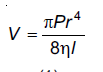
- b)
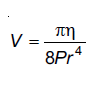
- c)
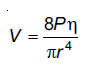
- d) All of these
Answer:
Question:

- a) Angle
- b) Time
- c) Length
- d) Mass
Answer: Angle
Question: Let P represent radiation pressure, c represent speed of light and I represent radiation energy striking a unit area per second, then PxI ycz will be dimensionless for
- a) x = z = –y
- b) x = y = –z
- c) x = y = z
- d) x = 0, y = z
Answer: x = z = –y
Question:

- a) [M0L2T–1]
- b) [M0L2T2]
- c) [M0L–1T–1]
- d) [M0L–1T2]
Answer: [M0L2T–1]
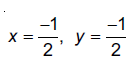
Question: The frequency of vibrations f of a mass m suspended from a spring of spring constant K is given by a relation of type f = cmxKy, where c is a dimensionless constant. The values of x and y are
- a)
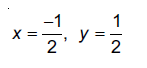
- b)

- c)
- d) None of these
Answer:
Question:

- a)

- b)

- c)
- d)

Answer:
Question: If energy E, velocity V and time T are taken as fundamental units, the dimensional formula for surface tension is
- a) [EV–2T–2]
- b) [E–2VT–2]
- c) [E–2VT–1]
- d) All of these
Answer: [EV–2T–2]
Question: If force F, area A and density D are taken as the fundamental units, the representation of Young’s modulus ‘Y’ will be
- a) [FA–1D0]
- b) None of this
- c) [FA–1D]
- d) [FA–2D2]
Answer: [FA–1D0]
Question: If velocity, time and force (V, T & F) are considered as fundamental quantities, the dimensional formula for mass will be
- a) [FTV–1 ]
- b) [FT–1V ]
- c) [F–1TV ]
- d) [FTV]
Answer: [FTV–1 ]
Question: If the error in the measurement of radius of a sphere is 2%, then the error in the determination of volume of the sphere will be
- a) 6%
- b) 8%
- c) 4%
- d) 2%
Answer: 6%
Question: Percentage errors in the measurement of mass and speed are 2% and 3% respectively. The error in the estimate of kinetic energy obtained by measuring mass and speed will be
- a) 8%
- b) 2%
- c) 12%
- d) 10%
Answer: 8%
Question: The density of a cube is measured by measuring its mass and length of its sides. If the maximum error in the measurement of mass and lengths are 3% and 2% respectively, the maximum error in the measurement of density would be
- a) 9%
- b) 7%
- c) 14%
- d) 12%
Answer: 9%
Question: A set of defective observation of weights is used by a student to find the mass of an object using a physical balance. A large number of readings will reduce
- a) Random error
- b) Random as well as systematic error
- c) Systematic error
- d) Neither random nor systematic error
Answer: Random error
Question: A force F is applied on a square area of side L. If the percentage error in the measurement of L is 2% and that in F is 4%, what is the maximum percentage error in pressure?
- a) 8%
- b) 6%
- c) 4%
- d) 2%
Answer: 8%
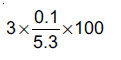
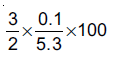
Question: The radius of a sphere is (5.3 ± 0.1) cm. The percentage error in its volume is
- a)
- b)

- c)
- d)
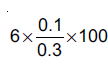
Answer:
Question: If the percentage error in the measurement of momentum and mass of an object are 2% and 3% respectively, then maximum percentage error in the calculated value of its kinetic energy is
- a) 7%
- b) 5%
- c) 1%
- d) 2%
Answer: 7%
Question:

- a)
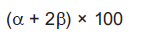
- b)
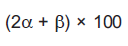
- c)

- d) None of this
Answer:
Question: A public park, in the form of a square, has an area of (100 ± 0.2) m2. The side of park is
- a) (10 ± 0.01) m
- b) (10 ± 0.1) m
- c) (10 ± 0.02) m
- d) (10 ± 0.2) m
Answer: (10 ± 0.01) m
Question:

- a)

- b)
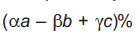
- c)

- d) None of this
Answer:
Question:

- a) 0.8%
- b) 0.1%
- c) 1.8%
- d) 8%
Answer: 0.8%
Question:

- a)

- b)

- c)

- d)

Answer:
Question: The pair of quantities having same dimensions is
- a) Work and Torque
- b) Impulse and Surface Tension
- c) Young's modulus and Energy
- d) Angular momentum and Work
Answer: Work and Torque
Question: The damping force on an oscillator is directly proportional to the velocity. The units of the constant of proportionality are
- a) kgs–1
- b) kgs
- c) kgms–1
- d) kgms–2
Answer: kgs–1
Question:

- a) [LT–1]
- b) [L–1T]
- c) [L1/2T–1/2]
- d) [L1/2T1/2]
Answer: [LT–1]
Question:

- a) [M1L1T–2A–2]
- b) [L–1T]
- c) Both
- d) None of this
Answer: [M1L1T–2A–2]
Question: The density of a material in CGS system of units is 4 g/cm3. In a system of units in which unit of length is 10 cm and unit of mass is 100 g, the value of density of material will be
- a) 40
- b) 0.4
- c) 0.04
- d) 400
Answer: 40
Question: What is the dimension of surface tension?
- a) [ML0T–2]
- b) [M1L0T–2]
- c) Both
- d) None of this
Answer: [ML0T–2]
Question: Which two of the following five physical parameters have the same dimensions?
(a) Energy density (b) Refractive index
(c) Dielectric constant (d) Young’s modulus
(e) Magnetic field
- a) (a) and (d)
- b) (c) and (e)
- c) (b) and (d)
- d) (a) and (e)
Answer: (a) and (d)
Question:

- a) 14%
- b) 4%
- c) 7%
- d) 10%
Answer: 14%
Question: If the error in the measurement of radius of a sphere is 2%, then the error in the determination of volume of the sphere will be
- a) 6%
- b) 8%
- c) 4%
- d) 2%
Answer: 6%
Question: Which of the following has the dimensions of pressure?
- a) [ML–1T–2]
- b) [M–1L–1]
- c) [MLT–2]
- d) [ML–2T–2]
Answer: [ML–1T–2]
Question: Percentage errors in the measurement of mass and speed are 2% and 3% respectively. The error in the estimate of kinetic energy obtained by measuring mass and speed will be
- a) 8%
- b) 2%
- c) 12%
- d) 10%
Answer: 8%
Question: Which of the following is a dimensional constant?
- a) Gravitational constant
- b) Relative density
- c) Refractive index
- d) Poisson’s ratio
Answer: Gravitational constant
Question: The dimensions of RC is
- a) Time
- b) Inverse time
- c) Square of inverse time
- d) Square of time
Answer: Time
Question: The dimensions of impulse are equal to that of
- a) Linear momentum
- b) Pressure
- c) Force
- d) Angular momentum
Answer: Linear momentum
Question: The density of a cube is measured by measuring its mass and length of its sides. If the maximum error in the measurement of mass and lengths are 3% and 2% respectively, the maximum error in the measurement of density would be
- a) 9%
- b) 7%
- c) 14%
- d) 12%
Answer: 9%
Question:

- a) [ML5 T–2]
- b) [M–1 L5T2]
- c) [ML5 T1]
- d) All of these
Answer: [ML5 T–2]
Question: Which of the following dimensions will be the same as that of time?
- a)

- b)

- c)

- d) LC
Answer:
Question: The dimensional formula of magnetic flux is
- a) [ML2T–2A–1]
- b) [ML2T–1A3]
- c) [ML0T–2A–2]
- d) All of these
Answer: [ML2T–2A–1]
Free study material for Physics
Download Chapter MCQs: JEE Physics Units and Measurements
JEE Physics Units and Measurements Objective Test Questions
Review structured objective questions for JEE Physics Units and Measurements. Built according to official JEE guidelines, these MCQ sets support daily revision and core concept reinforcement.
NCERT-Aligned Objective Questions and Solutions
Built using the official NCERT book for JEE, these Physics objective sets provide reliable academic guidance. Pair your practice with our recommended NCERT solutions to master optimal problem-solving approaches.
Next Steps in Your Exam Preparation
Follow up your worksheet practice by attempting the interactive online Physics MCQ test for this chapter to evaluate your execution speed. All platform resources are free to access.
FAQs
You can get most exhaustive JEE Physics Units and Measurements MCQs Set 03 for free on StudiesToday.com. These MCQs for JEE Physics are updated for the 2026-27 academic session as per JEE examination standards.
Yes, our JEE Physics Units and Measurements MCQs Set 03 include the latest type of questions, such as Assertion-Reasoning and Case-based MCQs. 50% of the JEE paper is now competency-based.
By solving our JEE Physics Units and Measurements MCQs Set 03, JEE students can improve their accuracy and speed which is important as objective questions provide a chance to secure 100% marks in the Physics.
Yes, Physics MCQs for JEE have answer key and brief explanations to help students understand logic behind the correct option as its important for 2026 competency-focused JEE exams.
Yes, you can also access online interactive tests for JEE Physics Units and Measurements MCQs Set 03 on StudiesToday.com as they provide instant answers and score to help you track your progress in Physics.