

Download ICSE Class 8 History Civics Solutions by Goyal Brothers
Explore the complete Goyal Brothers textbook solutions for Class 8 History Civics. Tailored for the 2026-27 curriculum, this resource breaks down complex topics to support daily study and targeted revision.
Access Chapter 15 The United Nations Solutions for Class 8 History Civics
View or download the dedicated Chapter 15 The United Nations resource below. This chapter-by-chapter structuring ensures easy navigation for daily study routines and immediate access to core academic concepts.
Time To Learn
I. Fill in the blanks:
Question 1. All __________ can become members of the United Nations.
Answer: peace loving nations.
In simple words: Any country that loves peace can join the United Nations.
Exam Tip: Remember that 'peace loving nations' is the exact phrase used in the UN Charter for membership eligibility.
Question 2. The present number of member-countries in the UNO is __________.
Answer: 193.
In simple words: Today, there are 193 countries that are members of the UN.
Exam Tip: Memorize 193 as the current number of member states in the United Nations.
Question 3. One major goal of the UNICEF was __________.
Answer: Universal Child Immunisation against preventable diseases by 1990.
In simple words: UNICEF wanted to give life-saving vaccines to all children by the year 1990.
Exam Tip: Note that this goal was specifically aimed at protecting children from diseases that can be easily prevented.
Question 4. The International Court of Justice settles disputes between __________.
Answer: member states of the United Nations.
In simple words: The International Court of Justice helps solve disagreements between countries that belong to the UN.
Exam Tip: Keep in mind that only countries (member states) can bring disputes to this court, not individuals.
Question 5. The UNESCO came into existence in __________.
Answer: 1946.
In simple words: UNESCO was created in the year 1946.
Exam Tip: Don't confuse this with 1945, which is when the UN itself was formed.
II. Match the content of column A with other of column B:
| Column A | Column B |
|---|---|
| 1. UNESCO | (a) promotes health education among the masses. |
| 2. UNICEF | (b) helps in exchange of currencies. |
| 3. WHO | (c) tries to educate millions of people. |
| 4. ILO | (d) provides help to the children in the member-states. |
| 5. IMF | (e) improves the working conditions of the workers. |
Answer:
1. UNESCO - (c) tries to educate millions of people.
2. UNICEF - (d) provides help to the children in the member-states.
3. WHO - (a) promotes health education among the masses.
4. ILO - (e) improves the working conditions of the workers.
5. IMF - (b) helps in exchange of currencies.
In simple words: This table matches different parts of the UN with their jobs. For example, WHO works on health, and UNICEF helps kids.
Exam Tip: Associate key letters in agency names to remember their jobs (e.g., 'E' in UNESCO stands for Education, and 'H' in WHO stands for Health).
III. Answer the following questions:
Question 1. Why and when was the UNO formed?
Answer: The United Nations was set up on October 24, 1945. It was created to keep peace in the world, end poverty, stop hunger, and prevent unfairness. Another goal was to save humanity from another terrible war like the Second World War.
In simple words: The UN started on October 24, 1945. It was made to stop wars and help people who are poor, hungry, or treated unfairly.
Exam Tip: Be sure to write the full date, October 24, 1945, as it is celebrated every year as United Nations Day.
Question 2. What are the objectives and principles of the UNO?
Answer: The major objectives and principles of the UNO are:
Objectives of the United Nations:
1. To keep future generations safe from the pain of war, which has twice caused huge suffering in our history.
2. To support basic human rights, believe in the value of every person, and ensure equal rights for all people and nations.
3. To keep peace and safety around the world.
4. To build friendly relationships between countries by respecting everyone's rights.
5. To work together to solve global social, economic, and cultural issues while promoting freedom and rights for all.
Principles of the UNO:
The UN has set rules to help reach these goals. These rules are listed in the UN Charter:
1. Every member country is equal in this organization.
2. Members must carry out their duties honestly under the UN rules.
3. All countries should solve their disagreements in a peaceful way.
4. Countries must not use violence or force against each other.
5. Members must support UN actions by offering help, including military support when needed, to keep peace.
6. UN members must make sure that even non-member countries help keep the world safe and peaceful.
7. No country should interfere in the private, local matters of any other country.
In simple words: The UN's main goal is to prevent wars, protect human rights, and solve global problems together. To do this, all member countries must treat each other as equals and settle their issues peacefully.
Exam Tip: Be ready to separate your answer into two distinct parts: 'Objectives' (what the UN wants to achieve) and 'Principles' (the rules members must follow).
Question 3. Name the chief organs of the UNO and list down their functions.
Answer: There are six main organs of the United Nations:
1. The General Assembly: This is the main body where all members meet. Its functions include:
- Approving new members on the advice of the Security Council.
- Selecting the Secretary-General based on the Security Council's suggestion.
- Electing ten non-permanent members of the Security Council, as well as members of the Economic and Social Council and Trusteeship Council.
- Reviewing reports from other UN bodies and making decisions on them.
- Pointing out human rights issues to member nations.
- Planning and approving the annual budget and deciding each country's contribution.
- Alerting the Security Council when peace is threatened.
2. The Security Council: This organ is responsible for keeping world peace. Its functions include:
- Asking fighting nations to resolve issues through direct talks.
- Recommending mediation to settle disputes.
- Suggesting trade bans (embargoes) on nations that break UN rules.
- Ordering military actions to maintain security.
- Recommending new member admissions.
- Suggesting candidates for Secretary-General.
- Helping elect judges for the International Court of Justice.
- Requesting membership cancellation for nations that break the UN Charter.
- Calling emergency meetings of the General Assembly.
3. The Economic and Social Council (ECOSOC): This council works to improve the social and economic lives of people. It focuses on population control, international trade, women's equality, preventing crime, and stopping illegal drugs.
4. The Trusteeship Council: This body was set up to help territories that were not yet independent to gain self-government. It succeeded in helping ten out of eleven such territories gain independence after the Second World War.
5. The Secretariat: This is the administrative office of the UN. Its staff are hired from all over the world. It is led by the Secretary-General, who serves as the chief executive officer.
6. The International Court of Justice (ICJ): Based in The Hague, this court settles legal disputes between member countries. It also gives legal advice to other UN organs.
In simple words: The UN has six main parts: the General Assembly (where all meet), the Security Council (which stops wars), ECOSOC (which helps with money and health), the Trusteeship Council (which helped colonies), the Secretariat (which does office work), and the World Court (which solves legal fights).
Exam Tip: Learn the names of all six organs first, as questions often ask you to list them before describing their duties.
Question 4. Name the official languages of the UNO.
Answer: The six languages officially used by the UN are English, French, Spanish, Russian, Chinese, and Arabic.
In simple words: The UN uses six main languages: English, French, Spanish, Russian, Chinese, and Arabic.
Exam Tip: There are exactly six official languages; make sure you remember all of them.
Question 5. How does the UNO manage its funds?
Answer: The UN gets its money from payments made by its member countries. The amount each country pays is decided by the General Assembly, based on advice from a special committee on payments.
In simple words: Member countries give money to the UN. The General Assembly decides how much each country should pay.
Exam Tip: Mention that member states provide the funds, and the General Assembly determines the exact share of each state.
Question 6. Describe the UNO Flag. Draw and colour it.
Answer: The UN flag shows two curved olive branches that are open at the top, set against a light blue background. These olive branches stand as a symbol of peace.
In simple words: The UN flag has a blue background with two white olive branches. These branches mean peace.
Exam Tip: Make sure you state that the background is light blue and the olive branches symbolize peace.
Question 7. Name the permanent members of the UNO.
Answer: The five permanent members of the UN Security Council are the United States, the United Kingdom, France, China, and Russia.
In simple words: The five permanent member countries are the USA, UK, France, China, and Russia.
Exam Tip: These five countries are the only ones with veto power in the Security Council.
Additional Questions - Exercises
A. Fill in the blanks:
Question 1. The __________ was formed in 1920 after the end of the First World War.
Answer: League of Nations.
In simple words: The League of Nations was created in 1920 to keep peace after World War I.
Exam Tip: The League of Nations was the predecessor of the United Nations.
Question 2. Each member state of the UN can send up to __________ representatives to the General Assembly.
Answer: Five.
In simple words: Every country in the UN can send up to five people to represent them in the General Assembly.
Exam Tip: Remember that no matter how many representatives a country sends, it still gets only one vote.
Question 3. The Security council is often referred to as the __________ of the UN.
Answer: Enforcement Wing.
In simple words: The Security Council is called the enforcement branch because it has the power to make sure rules are followed.
Exam Tip: Focus on the phrase 'Enforcement Wing' as it highlights the Security Council's unique policing power.
Question 4. The five permament members of the Security Council are USA, UK, France, People’s Republic of China and the __________.
Answer: Russian Federation.
In simple words: The fifth permanent member country is Russia.
Exam Tip: Remember to use the official term 'Russian Federation' rather than just 'Russia' to match your textbook.
Question 5. The objective of the ECOSOC is to free the world from __________.
Answer: want.
In simple words: ECOSOC wants to make sure people in the world have what they need to live comfortably.
Exam Tip: In this context, 'want' represents basic human deprivation, poverty, and hunger.
Question 6. The WHO is a __________ agency of the UN.
Answer: specialized.
In simple words: WHO is a special agency of the UN that focus on healthcare.
Exam Tip: Keep in mind that specialized agencies like WHO are autonomous bodies working with the UN.
B. Match the following:
Question. Match the following:
| Column A | Column B |
|---|---|
| 1. San Francisco Conference | (a) organ of the UN |
| 2. UN headquarters | (b) 15 |
| 3. Security Council | (c) five |
| 4. Permanent members of the Security Council | (d) New York City |
| 5. Number of judges at the International Court of Justice | (e) 1945 |
Answer:
1. San Francisco Conference - (e) 1945
2. UN headquarters - (d) New York City
3. Security Council - (a) organ of the UN
4. Permanent members of the Security Council - (c) five
5. Number of judges at the International Court of Justice - (b) 15
In simple words: This list matches key UN facts, like its headquarters being in New York City and the court having 15 judges.
Exam Tip: Be sure to pair the San Francisco Conference with the year 1945, as it was when the UN Charter was signed.
C. Choose the correct answer:
Question 1. Which of the following dates is celebrated as United Nations Day?
(a) 24 October
(b) 22 March
(c) 21 June
(d) None of the options
Answer: (a) 24 October
In simple words: UN Day is celebrated on October 24 every year.
Exam Tip: This holiday is celebrated because the UN Charter officially took effect on October 24, 1945.
Question 2. What do the olive branches on the UN flag symbolize?
(a) peace
(b) wealth
(c) truth
(d) None of the options
Answer: (a) peace
In simple words: The olive branches on the UN flag are a symbol of world peace.
Exam Tip: Olive branches have historically been a symbol of peace since ancient Greek times.
Question 3. The Economic and Social Council consists of 54 members elected by the General Assembly for a 3/4/5-year term.
(a) 3-year term
(b) 4-year term
(c) 5-year term
(d) None of the options
Answer: (a) 3-year term
In simple words: The 54 members of ECOSOC are chosen by the General Assembly to serve for three years.
Exam Tip: Be careful with worksheets that might have typos; the correct term length for ECOSOC members under the UN Charter is exactly 3 years.
Question 4. Where is the International Court of Justice located?
(a) New York City in the USA
(b) The Hague in the Netherlands
(c) Paris in France
(d) None of the options
Answer: (b) The Hague in the Netherlands
In simple words: The International Court of Justice is based in the city of The Hague, which is in the Netherlands.
Exam Tip: The ICJ is the only major organ of the UN that is not located in New York City.
Question 5. Which of the following is the chief administrative organ of the UN?
(a) The Secretariat
(b) General Assembly
(c) International Court of Justice
(d) None of the options
Answer: (a) The Secretariat
In simple words: The Secretariat does all the main office and administrative work for the UN.
Exam Tip: The Secretariat is headed by the Secretary-General, who is the top executive of the UN.
D. State whether the following are true or false:
Question 1. All the members of the UN are members of the General Assembly.
Answer: True.
In simple words: Yes, every country that is a member of the UN also gets a seat in the General Assembly.
Exam Tip: This means all 193 member states are represented in the General Assembly.
Question 2. French is one of the official languages of the UN.
Answer: True.
In simple words: Yes, French is one of the six languages officially used by the UN.
Exam Tip: French is also one of the two working languages of the Secretariat.
Question 3. The Trusteeship Council is the most important organ of the UN.
Answer: False.
In simple words: This is false because the Security Council is considered the most powerful and important part of the UN.
Exam Tip: The Trusteeship Council suspended its operations in 1994 after the last trust territory, Palau, became independent.
Question 4. UNESCO and UNICEF are specialized agencies of the UN.
Answer: True.
In simple words: Yes, both UNESCO and UNICEF are special departments that work under the UN.
Exam Tip: Recognizing these as specialized agencies highlights their focused roles in education and child healthcare.
Question 5. Most of the world’s problems have disappeared with the end of the Cold War.
Answer: False.
In simple words: This is false because many conflicts and global problems still exist today even after the Cold War ended.
Exam Tip: The end of the Cold War did not mean the end of wars or global crises, and the UN's work remains vital.
E. Answer the following questions in one or two words/ sentences:
Question 1. Mention one important organ of the UN.
Answer: The Security Council is considered a highly important organ of the United Nations.
In simple words: The Security Council is one of the most important parts of the UN.
Exam Tip: You can name any of the six principal organs, but the Security Council is the most prominent.
Question 2. Who are the members of the General Assembly?
Answer: Every country that is a member of the United Nations holds a seat in the General Assembly.
In simple words: Every country that belongs to the UN is a member of the General Assembly.
Exam Tip: This makes the General Assembly the most representative organ of the UN.
Question 3. What is a negative vote by one of the permanent members of the Security Council known as?
Answer: A negative vote cast by any of the five permanent members of the Security Council is called a veto. This vote immediately rejects and cancels the proposed resolution.
In simple words: A veto is a 'no' vote by a permanent member. It can stop any decision from being passed.
Exam Tip: The word 'veto' is Latin for 'I forbid.' It is one of the most powerful tools in global politics.
Question 4. Why was the Trusteeship Council established?
Answer: When the UN was created, many countries were still colonized or affected by the Second World War. The Trusteeship Council was formed to protect these regions under foreign control and guide them toward independence and self-government.
In simple words: The Trusteeship Council was made to look after colonies and help them become free and run their own governments.
Exam Tip: Explain that its primary goal was helping non-self-governing territories achieve independence.
Question 5. Why did the UN impose economic sanctions against the South African government?
Answer: The UN set up trade restrictions against South Africa to put pressure on its government. This helped end the racist system of apartheid and brought freedom to the South African people.
In simple words: The UN stopped trade with South Africa to help end the unfair and racist system of apartheid.
Exam Tip: Remember to mention the word 'apartheid' when discussing South Africa, as it refers to the system of racial segregation.
Question 6. What is the relevance of the UN in today’s world?
Answer: Today, we need to improve and strengthen the UN to make it highly effective. This will help it resolve current global conflicts and bring peace, balance, and unity to our troubled world.
In simple words: The UN is still very important today. We need to make it stronger so it can solve modern conflicts and bring peace to our world.
Exam Tip: Emphasize that reforming the UN is essential for it to deal with modern-day challenges effectively.
F. Answer the following questions briefly:
Question 1. The magnitude and scale of destruction during the Second World War created a great revulsion for war and a passionate yearning for peace. In this context, explain:
(a) The signing of the Atlantic Charter
(b) The basic rights or the four freedoms guaranteed by the charter
(c) The San Francisco Conference and the establishment of the United Nations
Answer:
(a) Great Britain's Prime Minister, Winston Churchill, and US President Franklin D. Roosevelt met on a ship in the Atlantic Ocean. On August 14, 1941, they signed the Atlantic Charter.
(b) They agreed that after the war, all people should have four essential freedoms:
1. Freedom from want (poverty).
2. Freedom of speech.
3. Freedom of religious belief.
4. Freedom from fear.
(c) In June 1945, fifty nations gathered in San Francisco to sign the United Nations Charter. Poland signed it later, making 51 original member states. The UN was officially established on October 24, 1945, to protect people from future wars and support human rights. October 24 is now celebrated as UN Day.
In simple words: Churchill and Roosevelt signed the Atlantic Charter in 1941 to promise four basic freedoms. In 1945, 51 countries signed the UN Charter in San Francisco, officially starting the UN on October 24.
Exam Tip: Be sure to list the four freedoms exactly: want, speech, religion, and fear, as these are frequently tested in short-answer questions.
Question 2. With reference to the United Nations discuss:
(a) The UN flag
(b) Any four objetives of the UN outlined in the Preamble of the UN Charter
(c) The obligations of all nations that follow from these objectives
Answer:
(a) The flag of the UN shows a map of the world framed by two curved olive branches. These white symbols are set against a light blue background, where the branches represent peace.
(b) The main goals listed in the Preamble are:
1. To keep international peace and security.
2. To build friendly ties between countries based on equal rights.
3. To solve global economic, social, and cultural issues together.
4. To support human rights and basic freedoms for all people.
(c) Following these goals means that:
1. Every country, large or small, is equal.
2. Every member must follow the UN rules.
3. Disagreements must be solved peacefully.
4. No nation should use force or violence.
In simple words: The UN flag is blue and white with olive branches for peace. The UN's goals are to keep peace and protect human rights, meaning all countries are equal and must settle fights peacefully.
Exam Tip: Be sure to write at least four objectives in part (b) and list the corresponding duties of member states in part (c) to secure full marks.
Question 3. With reference to the General Assembly and Security Council of the UN, answer the following questions:
(a) Mention any four functions of the General Assembly.
(b) Explain the veto power of the permanent members of the Security Council. What happens when the Security Council cannot take any action because of the veto?
(c) State three important functions of the Security Council.
Answer:
(a) Four important functions of the General Assembly are:
1. To talk about global issues and suggest ways to solve them.
2. To recommend peaceful ways to settle disputes between countries.
3. To review and approve the UN's financial budget.
4. To choose the non-permanent members of the Security Council, ECOSOC, and Trusteeship Council.
(b) If any of the five permanent members of the Security Council votes 'no', the proposed plan is canceled. This is called veto power. If a veto prevents the Security Council from taking action during a crisis, the General Assembly can step in. It has the authority to make decisions to help bring back world peace.
(c) Three main duties of the Security Council are:
1. To look into global conflicts and suggest peaceful ways to solve them.
2. To ask member nations to stop trading with an aggressive country (economic sanctions).
3. To use military force to stop an aggressor if necessary.
In simple words: The General Assembly discusses world issues, approves the budget, and elects members. A veto is a 'no' vote by a permanent member that stops decisions; if this happens, the General Assembly can handle the crisis. The Security Council investigates disputes, uses sanctions, and can take military action to keep peace.
Exam Tip: Clearly define the word 'veto' and explain the fallback role of the General Assembly when a veto causes a deadlock in the Security Council.
Question 4. With reference to the organs of the UN, discuss:
(a) Any three functions of the Economic and Social Council (ECOSOC)
(b) The composition and functions of the International Court of Justice
(c) Any four significant achievements of the UN
Answer:
(a) Three key functions of ECOSOC are:
1. To encourage economic progress, social growth, and respect for human rights.
2. To solve problems regarding health, illiteracy, drug abuse, job creation, and women's equality.
3. To coordinate and oversee the activities of specialized UN groups like WHO, UNESCO, UNICEF, and ILO.
(b) The International Court of Justice has 15 judges from different countries, chosen by the General Assembly and the Security Council. Each judge is elected for a term of 9 years, and no two judges can be from the same country. Its functions are:
1. To resolve legal disagreements brought to it by member states.
2. To offer legal guidance to other UN branches when requested.
(c) Four major achievements of the UN are:
1. It successfully stepped in to bring back peace in major conflicts, such as the Korean War and the Suez Canal crisis.
2. It helped colonies like Indonesia, Algeria, and Morocco win their freedom.
3. It used economic sanctions to help end the unjust apartheid system in South Africa.
4. It has worked constantly to protect human rights, fight poverty, and improve child welfare and healthcare worldwide through its specialized agencies.
In simple words: ECOSOC works on social progress, healthcare, and human rights. The World Court has 15 judges with 9-year terms who solve international legal fights. The UN's achievements include restoring peace in wars, helping colonies become free, fighting apartheid, and helping children and poor people.
Exam Tip: When writing achievements, name specific conflicts (like the Korean War) or countries (like South Africa) to make your answer strong and high-scoring.
G. Picture Study
This building is the headquarters of an international organization which was established in October 1945 to maintain international peace and security.
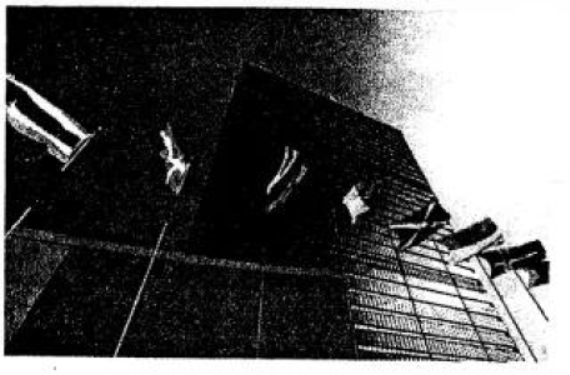
Question 1. Name the organization.
Answer: The organization is the United Nations (UN).
In simple words: This building belongs to the United Nations.
Exam Tip: Ensure you write out 'United Nations' fully rather than just 'UN' in exams.
Question 2. Where are the headquarters of this organization located?
Answer: The headquarters are situated in New York City.
In simple words: The main offices are in New York City.
Exam Tip: Remember that New York City, USA, is the main headquarters of the UN.
Question 3. Mention four important objectives of this organization.
Answer: Four main goals of this organization are:
1. To keep peace and safety around the world.
2. To build friendly relationships between different countries based on equality.
3. To work together to solve international economic, social, and cultural problems.
4. To promote human rights and freedoms for all people.
In simple words: The UN's main goals are to stop wars, encourage countries to be friendly, solve global problems together, and protect basic rights.
Exam Tip: Choose the four simplest objectives to memorize, as any four will get you full marks.
Question 4. Name three major organs of this organization.
Answer: Three principal organs of the UN are the General Assembly, the Security Council, and the Economic and Social Council (ECOSOC).
In simple words: Three main parts of the UN are the General Assembly, the Security Council, and ECOSOC.
Exam Tip: You can name any three of the six main organs, but these three are the most commonly discussed.
Free study material for History Civics
Step-by-Step Solutions for Class 8 History Civics Chapter 15 The United Nations
ICSE Chapter Solutions: Class 8 History Civics Chapter 15 The United Nations
Review accurate ICSE solutions for Chapter 15 The United Nations tailored for Class 8 History Civics students. Use these step-by-step notes to simplify difficult textbook exercises and improve exam readiness.
Detailed Problem Solving for ICSE Class 8 History Civics
Tackle complex theorems and numerical problems easily by cross-referencing your working steps with our structured solution guides.
Next Steps in Your Class 8 History Civics Preparation
Wrap up your chapter revision by verifying core concepts against standard ICSE question formats. All resources on our platform are free to access.
FAQs
You can download the verified Goyal Brothers solutions for Chapter 15 The United Nations on StudiesToday.com. Our teachers have prepared answers for Class 8 History Civics as per 2026-27 ICSE academic session.
Yes, our solutions for Chapter 15 The United Nations are designed as per new 2026 ICSE standards. 40% competency-based questions required for Class 8, are included to help students understand application-based logic behind every History Civics answer.
Yes, every exercise in Chapter 15 The United Nations from the Goyal Brothers textbook has been solved step-by-step. Class 8 students will learn History Civics conceots before their ICSE exams.
Yes, follow structured format of these Goyal Brothers solutions for Chapter 15 The United Nations to get full 20% internal assessment marks and use Class 8 History Civics projects and viva preparation as per ICSE 2026 guidelines.