

Download Class 5 Environmental Studies Practice Worksheets
Review targeted academic worksheets with the CBSE Class 5 EVS Revision Worksheet Set 02. Built according to official educational standards for the 2026-27 term, these downloadable Class 5 Environmental Studies resources support effective daily practice and detailed self-evaluation for All Chapters.
Access All Chapters Practice Papers and Solutions
Navigate directly to the solved Environmental Studies worksheets using the digital viewer below. Each practice set includes detailed step-by-step solutions, allowing students to instantly cross-check their work and identify areas requiring further revision.
Q.1 Choose the correct option:-
(i) Plants produce this gas during photosynthesis
(a) Nitrogen
(b) Carbon dioxide
(c) Oxygen
(d) Hydrogen
Answer: (c) Oxygen
During photosynthesis, green plants absorb carbon dioxide, water, and sunlight to produce glucose and release oxygen gas into the atmosphere.
In simple words: Plants give out oxygen during photosynthesis.
Exam Tip: Remember that plants take in carbon dioxide and give out oxygen during food making, which is the reverse of human respiration.
(ii) Nymph is a stage in the life cycle of a/an
(a) mammal
(b) insect
(c) amphibian
(d) reptile
Answer: (b) insect
Incomplete metamorphosis in certain insects like grasshoppers and dragonflies includes three stages: egg, nymph, and adult.
In simple words: Nymph is a young insect stage that looks similar to an adult.
Exam Tip: Distinguish between caterpillar/larva (complete metamorphosis) and nymph (incomplete metamorphosis).
(iii) The basic unit of nervous system is
(a) Neuron
(b) spinal cord
(c) cerebellum
(d) spine
Answer: (a) Neuron
Neurons are specialized nerve cells that transmit electrical and chemical signals throughout the body.
In simple words: Neuron is the tiny building block of our nervous system.
(iv) A human body has ____________ muscles.
(a) 30
(b) 712
(c) 600
(d) 330
Answer: (c) 600
The human muscular system consists of more than 600 skeletal muscles that work together with bones to produce movement.
In simple words: There are over 600 muscles in our body.
Exam Tip: Do not confuse muscle count (over 600) with adult bone count (206).
(v) According to Greeks, a man called .......... held up the sky on his shoulders.
(a) Atlas
(b) Vas co da Gama
(c) Columbus
(d) Dara Singh
Answer: (a) Atlas
In Greek mythology, the Titan Atlas was condemned to hold up the celestial heavens on his shoulders, which is why book of maps is named after him.
In simple words: Atlas was the mythical giant who carried the sky.
Exam Tip: Connect the mythological figure Atlas with the collection of maps known as an atlas.
(vi) A material which was not used in the past to make map
a) clay
(b) animal skin
(c) papyrus
(d) computers
Answer: (d) computers
Ancient cartographers drew maps on clay tablets, animal skins (parchment), and papyrus. Computers are modern electronic devices.
In simple words: Computers are modern inventions, not ancient map-making materials.
Exam Tip: Ancient writing and mapping materials included clay, papyrus, and animal skins.
Q.2 Fill in the blanks:
(a) Seeds of ____________ disperse by explosive self dispersal mechanism.
Answer: pea (or balsam, touch-me-not)
In simple words: Pea pods dry up and burst open to throw seeds away.
Exam Tip: Explosion mechanism occurs when seed pods dry and split violently.
(b) Baby of a lion is called__________ .
Answer: cub
In simple words: Young lions are called cubs.
Exam Tip: Memorize standard animal young names (cub, calf, puppy, kitten).
(c) The black centre spot in the middle of the eye is called _____________.
Answer: pupil
In simple words: The pupil is the opening that lets light into the eye.
Exam Tip: The pupil adjusts in size depending on the amount of light.
(d) There are _____________ bones in human palm.
Answer: 5 (metacarpals)
In simple words: The palm contains 5 metacarpal bones.
Exam Tip: Hand bones include carpals (wrist), metacarpals (palm), and phalanges (fingers).
(e) The 0 longitude passes through _________________________, England.
Answer: Greenwich
In simple words: The Prime Meridian passes through Greenwich near London.
Exam Tip: 0 degree longitude is also known as the Prime Meridian or Greenwich Meridian.
(f) A _____________ is a device used to find directions.
Answer: magnetic compass
In simple words: A compass shows directions like North, South, East, and West.
Exam Tip: The magnetic needle of a compass always points towards the magnetic North pole.
(g) During the Revolt of 1857, _____________remained faithful to the foreign rule.
Answer: several Indian rulers (or Nizam of Hyderabad / Scindias of Gwalior)
In simple words: Some local rulers did not support the rebels and helped the British.
Exam Tip: Lack of pan-Indian unity was a major reason for the failure of the 1857 revolt.
(h) Secretary General is appointed by _____________ .
Answer: the General Assembly upon the recommendation of the Security Council
In simple words: The UN General Assembly appoints the Secretary General.
Exam Tip: Know the key principal organs and officials of the United Nations.
Q.3 Correct the false statement:
(a) Grafting is a natural way by which plants reproduce.
Answer: Grafting is an artificial (man-made) method of vegetative propagation in plants.
In simple words: Farmers and gardeners perform grafting artificially, it does not happen naturally.
Exam Tip: Natural vegetative propagation includes runners, tubers, bulbs, and rhizomes.
(b) Ostrich lays the smallest egg.
Answer: Ostrich lays the largest egg in the world.
In simple words: Ostrich eggs are the biggest among all living birds.
Exam Tip: Hummingbird lays the smallest egg.
(c) 180 longitude is called Prime Meridian.
Answer: 0 longitude is called Prime Meridian (or 180 longitude is the International Date Line).
In simple words: The Prime Meridian is at 0 degrees, not 180 degrees.
Exam Tip: Prime Meridian splits the earth into Eastern and Western Hemispheres.
(d) A small scale map shows small land area in great detail.
Answer: A large scale map shows a small land area in great detail (or A small scale map shows a large area in less detail).
In simple words: Large scale means more detail of a smaller place.
Exam Tip: Inverse relationship: Large scale = small area + high detail; Small scale = large area + low detail.
Q.4 Match the column
| Column A | Column B |
|---|---|
| (a) Latitudes | Parallels |
| (b) Longitudes | Run North to South |
| (c) North Pole | Arctic Ocean |
| (d) South Pole | Antarctic Ocean |
Answer:
(a) Latitudes - Parallels
(b) Longitudes - Run North to South
(c) North Pole - Arctic Ocean
(d) South Pole - Antarctic Ocean
In simple words: Latitudes run parallel across the globe, while longitudes run from pole to pole.
Exam Tip: Latitudes are circles parallel to the equator; longitudes are semi-circles meeting at the poles.
Q.5. Give reasons for the following:
(a) Places near equator has hot climate.
Answer: Places near the equator receive direct vertical rays of the sun throughout the year, concentrating solar energy over a smaller area.
In simple words: Direct sun rays make regions near the equator very hot.
Exam Tip: Sunlight falls slantingly near the poles and vertically near the equator.
(b) Skull is important
Answer: The skull is important because it encases and protects the delicate brain from physical injuries and shocks.
In simple words: Skull acts as a hard helmet protecting our brain.
Exam Tip: The cranium is the bony part of the skull that houses the brain.
(c) Aurangzeb could not control the activities of the East India Company.
Answer: Aurangzeb was preoccupied with prolonged military campaigns in the Deccan and faced widespread rebellions across the vast Mughal Empire, leaving him unable to check the growing commercial and naval power of the English East India Company.
In simple words: Aurangzeb was busy fighting wars in South India and could not monitor British traders properly.
Exam Tip: The Deccan campaigns drained Mughal resources and military attention.
(d) The League of Nations was formed in 1919.
Answer: The League of Nations was established following the Paris Peace Conference at the end of World War I with the primary objective of maintaining world peace and preventing future global conflicts.
In simple words: It was created after World War I to stop future wars.
Exam Tip: The League of Nations was later replaced by the United Nations after World War II.
Q.6 Give answer in one word.
(a) Model of the Earth_________________.
Answer: Globe
In simple words: A globe is a spherical miniature model of Earth.
Exam Tip: Globes show correct shapes and distances of continents and oceans.
(b) Four points on the four sides of compass. ________________
Answer: Cardinal directions (North, South, East, West)
In simple words: The four main compass points are North, South, East, and West.
Exam Tip: Also known as cardinal points.
(c) Male part of the flower _____________________.
Answer: Stamen
In simple words: Stamen is the pollen-producing male organ of a flower.
(d) Little Brain. _________________.
Answer: Cerebellum
In simple words: Cerebellum is called the little brain and controls body balance.
Exam Tip: Cerebellum coordinates voluntary muscle movements and posture.
(e) Method of showing disagreement by one party towards the other. _________
Answer: Protest (or Dissent / Strike)
In simple words: Expressing opposition is called a protest.
Exam Tip: Peaceful protest is a democratic way to voice grievances.
Q7. Give answers for the following:
(a) Identify the picture and answer the following
(i) This is the picture of ____________
(ii) Write its two functions
Answer:
(i) Human hand bones (Wrist and hand skeletal structure)
(ii) Two functions: (1) Allows gripping, holding objects, and fine motor tasks. (2) Provides structural support and flexibility for daily manual activities.
In simple words: It is the skeleton of the human hand used for grasping and working.
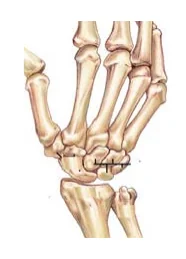
Exam Tip: The human hand has carpals, metacarpals, and phalanges.
(b) It belongs to ___________ group
Write two features of the group
Answer:
Group: Mammal (Cat)
Two features: (1) They give birth to live young ones and feed them milk. (2) Their bodies are covered with hair or fur, and they are warm-blooded animals.
In simple words: Cats are mammals; they have fur and feed milk to their babies.
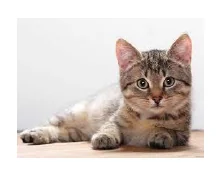
Exam Tip: Mammals possess mammary glands and external ears (pinnae).
(c) Write any three causes of revolt of 1857.
Answer:
1. Introduction of the Enfield rifle cartridges greased with animal fat (cow and pig), offending Hindu and Muslim religious sentiments.
2. Economic exploitation through heavy taxation, destruction of traditional Indian handicrafts, and ruin of local artisans.
3. Political annexation policies like Lord Dalhousie's Doctrine of Lapse, which alienated Indian rulers.
In simple words: Religious anger over rifle cartridges, heavy taxes, and unfair annexation caused the revolt.
Exam Tip: Mention economic, social, political, and military causes for complete marks.
(d) Write any 2 features of the Insects. Give two examples.
Answer:
Features of insects:
1. Their body is divided into three distinct regions: head, thorax, and abdomen.
2. They possess three pairs of jointed legs (6 legs total) and usually one or two pairs of wings.
Examples: Butterfly, Ant (or Housefly, Mosquito).
In simple words: Insects have 6 legs and a three-part body. Examples are ants and butterflies.
Exam Tip: Insects belong to the phylum Arthropoda, meaning jointed legs.
(e) Give any three causes for the failure of revolt of 1857.
Answer:
1. Lack of all-India participation; many Indian rulers and regions did not support the uprising.
2. Poor organization, lack of central leadership, and inferior military equipment compared to the British.
3. Absence of a unified national vision or modern political alternative among the rebels.
In simple words: Lack of unity, poor leadership, and better British weapons led to failure.
Exam Tip: The revolt was localized mainly to northern and central India.
Q.8 Answer the following questions.
(a) How did people find out that the Earth is a sphere?
Answer: People realized Earth is a sphere through circumnavigation voyages (such as Ferdinand Magellan's crew sailing around the globe), photographs taken from space satellites, and observing the curved shadow of Earth on the Moon during lunar eclipses.
In simple words: Space photos, lunar eclipse shadows, and round-the-world journeys proved Earth is round.
Exam Tip: Mention space photographs as the most modern and conclusive proof.
(b) Who is the head of Secretariat? Write its functions.
Answer: The Secretary-General is the head of the United Nations Secretariat.
Functions:
1. Manages day-to-day administrative work and staff of the UN.
2. Brings international disputes and threats to peace to the attention of the Security Council.
In simple words: The Secretary-General heads UN administration and handles international disputes.
Exam Tip: The Secretariat is the administrative arm of the United Nations.
(c) What are reflex actions? Give two examples.
Answer: Reflex actions are sudden, automatic, involuntary responses to stimuli controlled primarily by the spinal cord without conscious brain involvement.
Examples:
1. Quickly withdrawing your hand after touching a hot object.
2. Blinking eyes automatically when a bright light flashes or dust enters.
In simple words: Reflex actions are automatic body responses to danger to prevent injury.
Exam Tip: Reflex arcs bypass the brain for lightning-fast survival responses.
(d) What are ribs? How many ribs are there in our body?
Answer: Ribs are thin, curved, flat bones that form a protective cage around vital organs like the heart and lungs in the chest cavity.
There are 24 ribs in the human body, arranged in 12 pairs.
In simple words: Ribs are curved bones forming a cage to protect heart and lungs. We have 12 pairs (24 total).
Exam Tip: First 7 pairs are true ribs, next 3 are false ribs, and last 2 pairs are floating ribs.
Q.9 Write one difference between:
(i) Forelimbs and Hind limbs.
Answer: Forelimbs are the upper limbs (arms in humans or front legs in animals) used for holding objects, writing, and various tasks, whereas Hind limbs are the lower limbs (legs in humans or back legs in animals) specifically adapted for walking, running, and supporting body weight.
In simple words: Forelimbs are used for grasping or front movement, while hind limbs support walking and body weight.
Exam Tip: Contrast upper/front limbs with lower/rear limbs.
(ii) Globe and map.
Answer: A globe is a three-dimensional spherical model representing the entire Earth accurately, while a map is a two-dimensional flat drawing of all or part of the Earth's surface.
In simple words: A globe is round and 3D, while a map is flat and 2D.
Exam Tip: Globes show true shapes and areas, whereas flat maps always have some distortion.
Q.10 Rahul cannot speak properly. He is suffering from ________________________. His ___________________ part of the brain is weak.
Answer: speech impairment (or aphasia / speech disorder). His cerebrum (specifically the speech center / Broca's area) part of the brain is weak.
In simple words: Speech issues relate to weakness in the cerebrum area controlling speech.
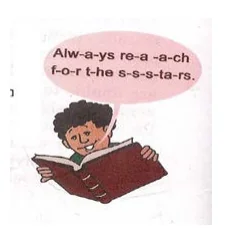
Exam Tip: Cerebrum controls higher functions like speech, learning, memory, and thinking.
Q.11. Complete the flow chart: Life cycle of a frog includes [Boxes: Egg -> Tadpole -> Froglet -> Adult Frog]
Answer:
Box 1: Egg
Box 2: Tadpole
Box 3: Froglet
Box 4: Adult Frog
In simple words: Frog life cycle goes from egg to tadpole, then froglet, and finally adult frog.
Exam Tip: Remember the four stages of amphibian metamorphosis.
Q.12 Draw the following:
(a) Symbol of Airport
(b) Bicycle path
(c) Church
Answer:
(a) Airport symbol: A small silhouette of an airplane inside a circle or square.
(b) Bicycle path symbol: A silhouette of a bicycle on a blue or white sign.
(c) Church symbol: A simple outline of a building featuring a Christian cross on top of its steeple.
In simple words: Standard map symbols show an airplane for airports, a cycle for bike paths, and a cross on a building for a church.
Exam Tip: Map symbols are universal standard signs used across cartography.
Q.13 Draw a well labeled diagram of Brain.
Answer:
Description of Brain structure:
- Cerebrum (largest upper part, folded surface)
- Cerebellum (smaller rear-bottom part)
- Brain stem / Medulla (stalk connecting brain to spinal cord)
In simple words: Sketch the brain showing the large cerebrum on top, cerebellum at the back, and brain stem at the bottom.
Exam Tip: Clearly label Cerebrum, Cerebellum, and Medulla to secure full marks.
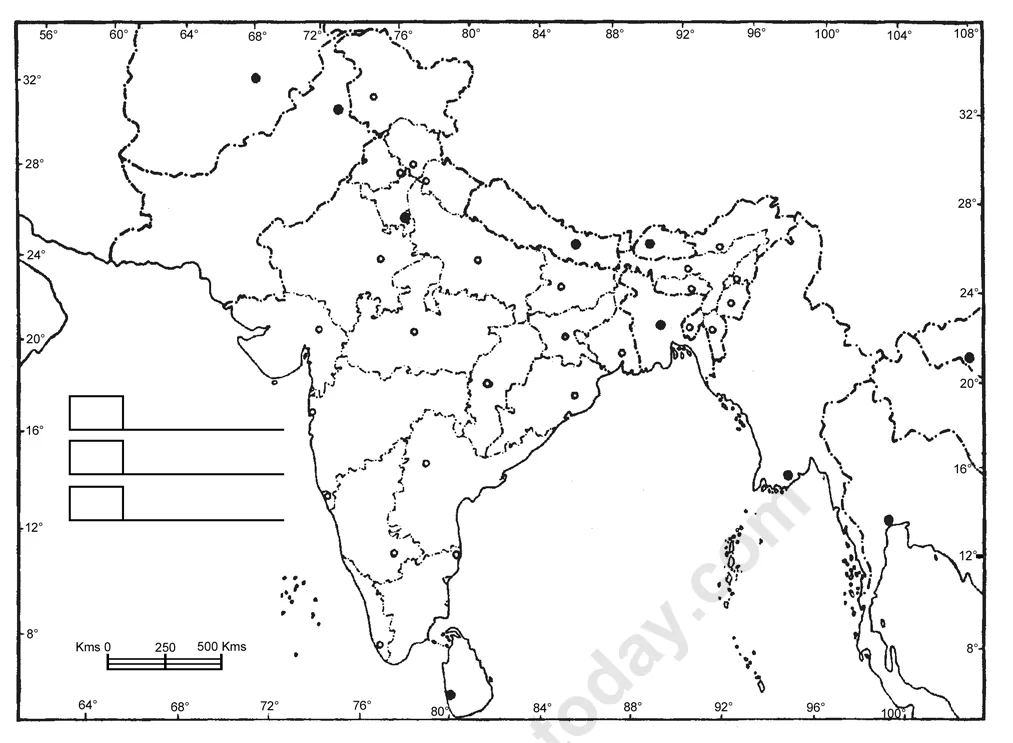
Q14. On the political map of India mark any four centres of revolt of 1857.
Answer:
Four major centers of the Revolt of 1857:
1. Meerut
2. Delhi
3. Kanpur
4. Lucknow (or Jhansi / Bareilly)
In simple words: Mark Meerut, Delhi, Kanpur, and Jhansi on the map of India as key 1857 revolt locations.
All Chapters Printable Worksheets and Exercises for Class 5 Environmental Studies
Practice Exercises for Class 5 Environmental Studies All Chapters
Explore reliable practice questions for All Chapters tailored for Class 5 Environmental Studies learners. Use these structured worksheets to evaluate exam preparedness and strengthen problem-solving skills throughout the 2026 academic session.
Step-by-Step Solutions and Practice Guidelines
Built using official NCERT guidelines for Class 5 Environmental Studies, these practice sheets provide reliable academic support. Cross-reference your completed work with our detailed solutions to learn standard answer-writing formats for CBSE exams.
Enhance Speed with Online Practice
Consistent engagement with these exercises builds familiarity with recurring exam themes. If specific areas within All Chapters cause trouble, utilize our dedicated NCERT solutions for Class 5 Environmental Studies to clear up doubts immediately.
FAQs
You can download the latest chapter-wise printable worksheets for Class 5 Environmental Studies All Chapters for free from StudiesToday.com. These have been made as per the latest CBSE curriculum for this academic year.
Yes, Class 5 Environmental Studies worksheets for All Chapters focus on activity-based learning and also competency-style questions. This helps students to apply theoretical knowledge to practical scenarios.
Yes, we have provided solved worksheets for Class 5 Environmental Studies All Chapters to help students verify their answers instantly.
Yes, our Class 5 Environmental Studies test sheets are mobile-friendly PDFs and can be printed by teachers for classroom.
For All Chapters, regular practice with our worksheets will improve question-handling speed and help students understand all technical terms and diagrams.